
Direct answer
Exercising for 20 minutes a day gets you close to the recommended activity target and lowers your health risks, but it only changes your body composition if the intensity and progression are right. District-S sees this all the time with busy professionals: short daily sessions work well for heart health and habit-building, but visible changes in strength and body fat require progressive overload and at least two strength sessions per week.
- 20 minutes a day = 140 minutes a week, just below the 150-minute minimum recommended by the Dutch Health Council.
- Daily moderate movement can typically reduce the risk of cardiovascular disease by 20 to 30%.
- For fat loss and muscle retention, duration is not what matters most, the training stimulus is: progressive strength training, twice a week.
- The biggest win is consistency: more than half of people in the Netherlands still do not consistently meet the activity guidelines.
- District-S combines short sessions with a tailored progression plan, so 20 minutes does not become the ceiling, but the starting point.
Introduction
No time for the gym because your schedule is packed, but still feeling like something needs to change with your strength, fitness, or waistline. District-S sees this every day with entrepreneurs and professionals: people settle on “I’ll just do 20 minutes a day” because three one-hour sessions a week do not fit. The real question is whether that actually moves the needle, or whether it just feels productive without changing much.
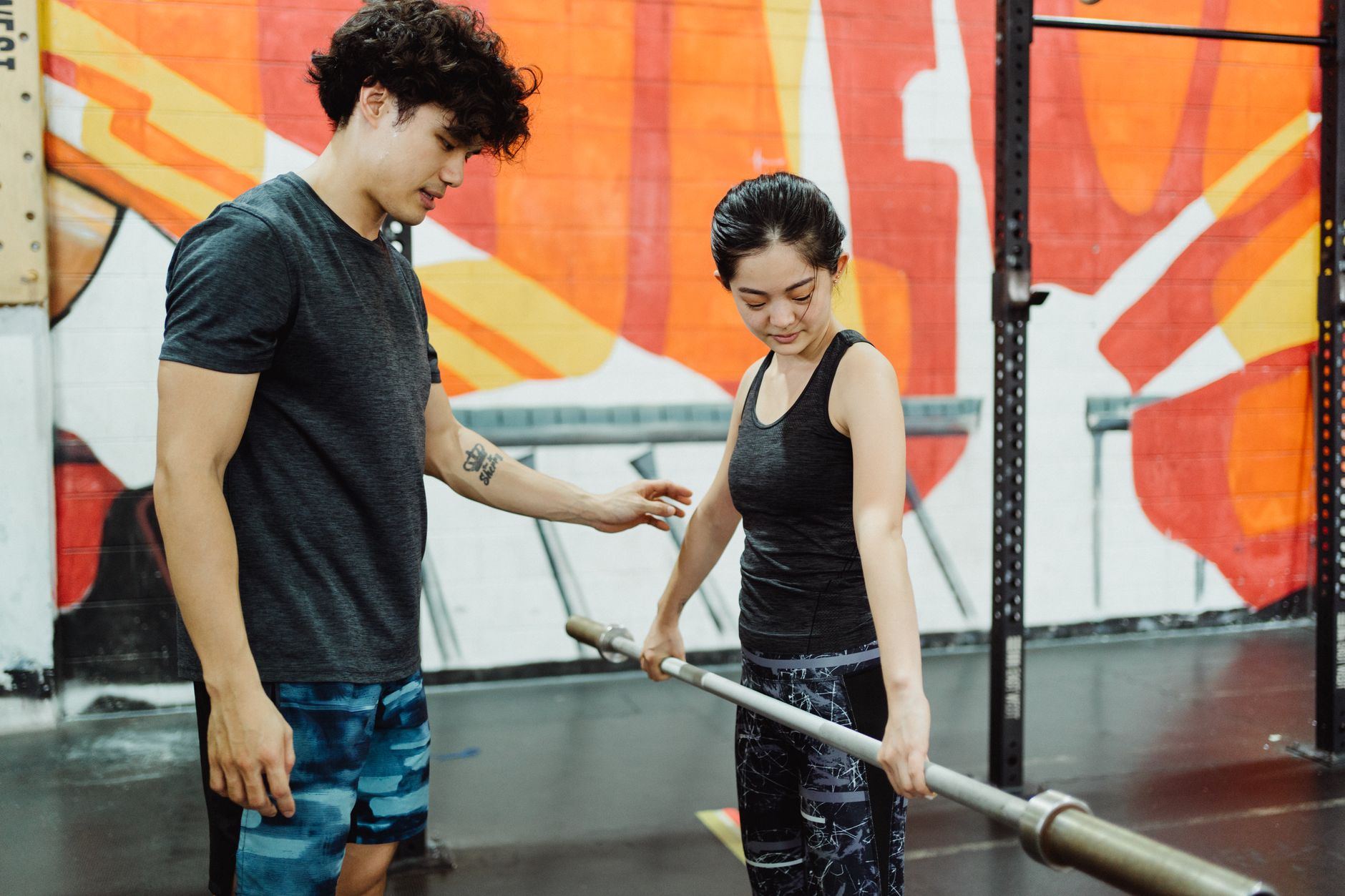
The honest answer sits somewhere in the middle. Twenty minutes a day is clearly better than doing nothing, and it comes surprisingly close to the official exercise guidelines. But moving more and training with a purpose are not the same thing. A daily walk helps keep your heart healthy. A stronger, leaner body requires a targeted stimulus that forces your muscles to adapt.
This article compares two approaches: 20 minutes of movement every day versus focused, guided training. What changes physically with each? Who benefits most from which approach? And how do you make sure those 20 minutes become a foundation, not a finish line?
What does 20 minutes of exercise a day do to your body?
Twenty minutes of moderate exercise a day mainly improves cardiovascular health and mental wellbeing, long before you notice much in the mirror. Your body responds quickly to regular movement, but visible changes usually lag behind internal ones.
Heart health improves first
The health benefits of daily movement are well established. According to the Hartstichting, getting enough exercise can reduce the risk of cardiovascular disease by 20 to 30%, while also improving sleep and reducing stress, anxiety, and depressive symptoms. Twenty minutes of moderate activity a day, such as brisk walking or cycling, adds up to 140 minutes a week. That is just below the threshold used by the Dutch Health Council: adults should get at least 150 minutes of moderate-intensity activity per week, spread across several days.
Why you often do not see it yet
This is where many people get confused. Low to moderate-intensity cardio burns energy while you are doing it, but it gives your muscles very little reason to grow or firm up. Your body adapts to the demands you place on it. If all you ask for is 20 minutes of walking, your heart becomes more efficient, but your body composition changes slowly. That is exactly why the WHO recommends both sides of the equation: 150 to 300 minutes of moderate aerobic activity per week, with proven effects on cardiovascular mortality, type 2 diabetes, cognition, and sleep.
The underrated power of doing it daily
What daily movement does extremely well is build a habit. Think of an entrepreneur with a calendar packed with meetings who never gets around to training because “an hour” always feels like too much. Twenty minutes a day is manageable enough to stick with, and consistency is exactly where most people struggle. In practice, District-S sees that a fixed daily rhythm creates the best foundation for increasing intensity later on. How you build discipline with a packed schedule often matters more than the number of minutes itself.
Checklist:
- Count your total weekly minutes: if you are below 150, add a daily 20-minute walk or bike ride as your baseline.
- Track your resting heart rate for a month: if it drops, your cardio is working, even if the mirror says otherwise.
- If 20 minutes feels easy, increase the intensity first, with pace or incline, rather than just making it longer. Or add strength sessions.
Why does body composition only really change with strength training?
A leaner, stronger body is built through progressive strength training, not by piling on more cardio minutes. This is where daily movement and goal-driven training start to separate.
The stimulus matters more than the time
The exercise guidelines do not just recommend cardio. They also specifically call for muscle and bone-strengthening activities at least twice a week. According to the RIVM and CBS, that combination clearly lowers the risk of diabetes, cardiovascular disease, depressive symptoms, and, in older adults, bone fractures. Muscles only grow and strengthen when you give them a stimulus they are not used to: more resistance, more repetitions, better technique. Twenty minutes of the same light movement does not provide that.
Losing weight is not the same as losing fat
This is the second common misunderstanding. If you only focus on the scale, pure cardio combined with eating less often leads to muscle loss as well. Less muscle means a lower resting metabolism, which makes regaining weight easier. The goal is not just to lose kilos, but to lose fat while keeping muscle. That is why District-S’s approach combines weight loss coaching with strength training and a tailored body composition approach, so the number on the scale does not tell the wrong story.
After 40, this matters even more
From around your forties onward, muscle mass gradually declines if you do not train for it. That speeds up bone loss and makes injuries more likely. This is exactly when two strength sessions a week can have an outsized impact, because you are actively pushing back against a process that would otherwise keep going in the background. Why strength training becomes more important after 40 comes down to that loss, and to the fact that the body still responds remarkably well to the right stimulus at any age.
Checklist:
- Schedule at least two strength sessions a week: less than that is often not enough to maintain muscle mass.
- Track body fat percentage or measurements like waist and hips, not just body weight.
- Increase the training load every 2 to 3 weeks in small steps: if nothing changes, adaptation stops.
- Not sure where to start? Have a professional assess your starting level and technique before adding weight.
20 minutes every day or focused training: which works better?
Twenty minutes a day wins on consistency and habit-building, focused guided training wins on results per hour invested. Which one is better depends on your goal and your starting point.
What each approach actually delivers
These two approaches do not have to compete. They serve different purposes. Daily movement supports general health. Focused training is how you deliberately build strength, fitness, and body composition. The table below compares them side by side.
| Aspect | Focused training (District-S) | 20 minutes of daily movement |
|---|---|---|
| Time investment | 2x per week, targeted | 7x per week, short |
| Effect on muscle mass | Build and maintain | ✅ Minimal |
| Effect on fat loss | High, with muscle retention | ⚠️ Moderate |
| Cardiovascular benefit | High | ✅ High |
| Coaching and technique | ✅ One-on-one | ❌ None |
| Results per hour | ✅ High | ⚠️ Lower |
Why intensity beats duration
Take a business owner around 45 with a week full of meetings, choosing between a daily walk or two guided one-hour sessions. If he only walks each day, his fitness may improve, but his body composition is unlikely to change much within three months. With two targeted strength sessions, progressive overload, and attention to technique, measurable gains in strength and reductions in body fat become realistic within that same quarter. Same schedule, very different result, because the stimulus is right. Whether you move briefly and often or train hard and with purpose depends on what you want to achieve, and in many cases the smartest route is a mix of both.
Why coaching matters when time is limited
When your time is tight, wasted effort costs more. Training alone in a busy gym often means waiting for equipment, second-guessing your technique, and following a program that never evolves. That is why District-S works with one-on-one coaching in a private gym in Eindhoven, where every minute counts and the plan is adjusted weekly based on progress. For clients in Eindhoven, that means less time spent, and better results from every session.
Checklist:
- If your goal is health and habit-building, 20 minutes a day is an excellent starting point.
- If your goal is strength, fat loss, or improving your physique, schedule 2 focused sessions and keep daily movement around them.
- If you have limited time and a specific goal, choose coaching: results per hour matter more than total duration.
- Not sure about your current level? Start with a baseline assessment of strength, measurements, and fitness.
How much exercise is enough, and are people in the Netherlands actually doing it?
The benchmark is 150 minutes of cardio plus two strength sessions a week, but most people in the Netherlands still do not meet that consistently. That makes the question of what counts as “enough” more relevant than it may seem.
The 2024 numbers
The reality is stubborn. According to the Kenniscentrum Sport en Bewegen, only 46% of people in the Netherlands aged 4 and older met the full activity guidelines in 2024. That means more than half the population is still not moving enough on a structural basis. In that context, 20 minutes a day is not a low ambition. For many people, it is already a major step forward.
The government target for 2040
The stakes are high. The Dutch government wants 75% of the population to meet the activity guidelines by 2040, as set out in the National Prevention Agreement, with the Beweegalliantie driving this effort since 2022, according to the RIVM. The gap between the current 46% and that 75% will only close if people not only move more, but keep doing it consistently.
Meeting the guideline is not the same as getting results
Hitting the minimum guideline and reaching your personal goal are two very different things. Someone can walk 150 minutes a week and still not lose any fat because the stimulus is missing. That is why District-S translates the guideline into a personal plan: enough movement as a base, targeted strength training as the engine, with nutrition and mindset coaching around it so the habit actually sticks. That difference between meeting the baseline and getting results is exactly where generic programs tend to lose people.
Checklist:
- Below 150 minutes a week? Make that your first target before worrying about intensity.
- Meeting the cardio target but not seeing change? Add the two recommended strength sessions.
- Cannot stick with it after six weeks? The issue is usually not motivation, but planning: make sessions smaller and more fixed.
- Want to know where you stand? A free trial session gives you a realistic picture of your starting point.
Which approach is right for you?
Choose daily movement if your goal is health and consistency, and focused training if you want visible changes in strength or body fat. For most people, the smartest approach is a combination of both.
When daily movement is enough
If you are currently doing very little, 20 minutes a day is one of the best first steps you can take. It lowers health risks, improves sleep, and creates the rhythm you can build on later. People dealing mainly with stress and a sedentary work life often feel the benefits within a few weeks.
When focused training gives you more
If you want to lose weight, get stronger, or rebuild safely after an injury, duration is not your main lever, intensity and technique are. Two targeted sessions a week with progressive overload will do more for your body composition than seven separate walks. This matters even more during rehab or when you have a specific goal, because the wrong load can be just as unhelpful as too little.
The combination that works best in real life
In District-S’s work with busy professionals, the best results usually come from a hybrid approach: daily movement for maintenance, plus two coached strength sessions as the driver of progress. That way, you benefit from the habit power of a daily routine and the results that come from focused training. For clients in Eindhoven, that means a plan built around their schedule, not the other way around.
Checklist:
- Hardly active right now? Start with 20 minutes a day and build the routine first.
- Have a specific goal like fat loss, strength, or recovery? Schedule 2 coached sessions and keep daily movement around them.
- Busy schedule? Prioritize results per hour over total exercise time, and follow a plan that evolves with you.
- Unsure about technique or training load? Always begin with a baseline assessment and expert guidance.
Frequently asked questions
What does 20 minutes of exercise a day do to your body?
Doing 20 minutes of moderate exercise every day mainly improves your cardiovascular health, sleep, and stress levels. It adds up to 140 minutes per week, just below the 150-minute guideline, and can typically reduce your risk of cardiovascular disease by 20 to 30%. Changes in body composition tend to be slow, because light cardio does not give your muscles enough of a growth stimulus.
Is 20 minutes a day enough to lose weight?
For long-term fat loss, 20 minutes of daily cardio is usually not enough on its own, because it does not provide much stimulus for muscle retention. People who only do cardio and eat less often lose muscle too, which lowers metabolism and makes weight regain more likely. That is why daily movement works best when combined with two strength sessions a week, while tracking body fat rather than only the scale.
How many times a week should you train for visible results?
For visible changes in strength and body shape, two focused strength sessions a week are often enough, provided the training load increases progressively. Duration is not the key factor, intensity and technique are. A busy entrepreneur often gets more out of two guided hours than seven separate walks.
Can you still get lean and toned after 40?
Yes, your body still responds well to targeted strength training after 40, but it also becomes more important. From that age onward, muscle mass gradually declines without training, which speeds up bone loss and raises injury risk. Two strength sessions a week help counter that process and can make a big difference to strength, posture, and body composition.
Why does coached training work better when you have little time?
When your schedule is packed, you cannot afford to waste training time, and that is exactly where coaching makes the difference. One-on-one training means no waiting around, proper technique, and a plan that adapts week by week as you progress. That is why District-S works in a private gym in Eindhoven, so every session delivers the best possible return on your time.
Conclusion
Twenty minutes of exercise a day does make a real difference: a healthier heart, better sleep, less stress, and a habit you can actually maintain. If you are currently doing very little, it is one of the best first steps you can take, especially when more than half of the Netherlands still does not consistently meet the activity guidelines. But moving more and training for results are still two different things. A leaner, stronger body comes from a targeted stimulus: strength training twice a week with progressive overload, not simply from more minutes of light cardio.
The smartest route combines both: daily movement for maintenance, focused training as the engine of change. Start with an honest baseline of your strength, fitness, and body composition, then build from there. If you are in Eindhoven and want results-driven training without wasting time, District-S turns that approach into a personal plan that fits your schedule, including a free trial session to assess your starting point.
Sources
- Hartstichting
- Gezondheidsraad
- WHO — Pubmed
- RIVM en CBS — Sportenbewegenincijfers
- Kenniscentrum Sport en Bewegen — Kenniscentrumsportenbewegen
- RIVM — Rivm
- Beweegrichtlijnen 2017 — Gezondheidsraad
- Beweegcijfers 2024 bekend: conclusie blijft zorgwekkend — Kenniscentrum Sport en Bewegen