
At District-S, we see the same pattern over and over: professionals with unpredictable workweeks don’t struggle because they lack motivation, but because their training approach doesn’t adapt to their schedule. That’s why we don’t work from a fixed weekly template. Instead, we build tailored training plans, nutrition guidance, and mental coaching around changing workdays. In busy weeks, 3 sessions of 20–30 minutes consistently work better than occasional long workouts. That practical experience also explains why “not enough time” usually isn’t the root cause—it’s the visible symptom of a system that doesn’t fit the way someone actually lives and works.
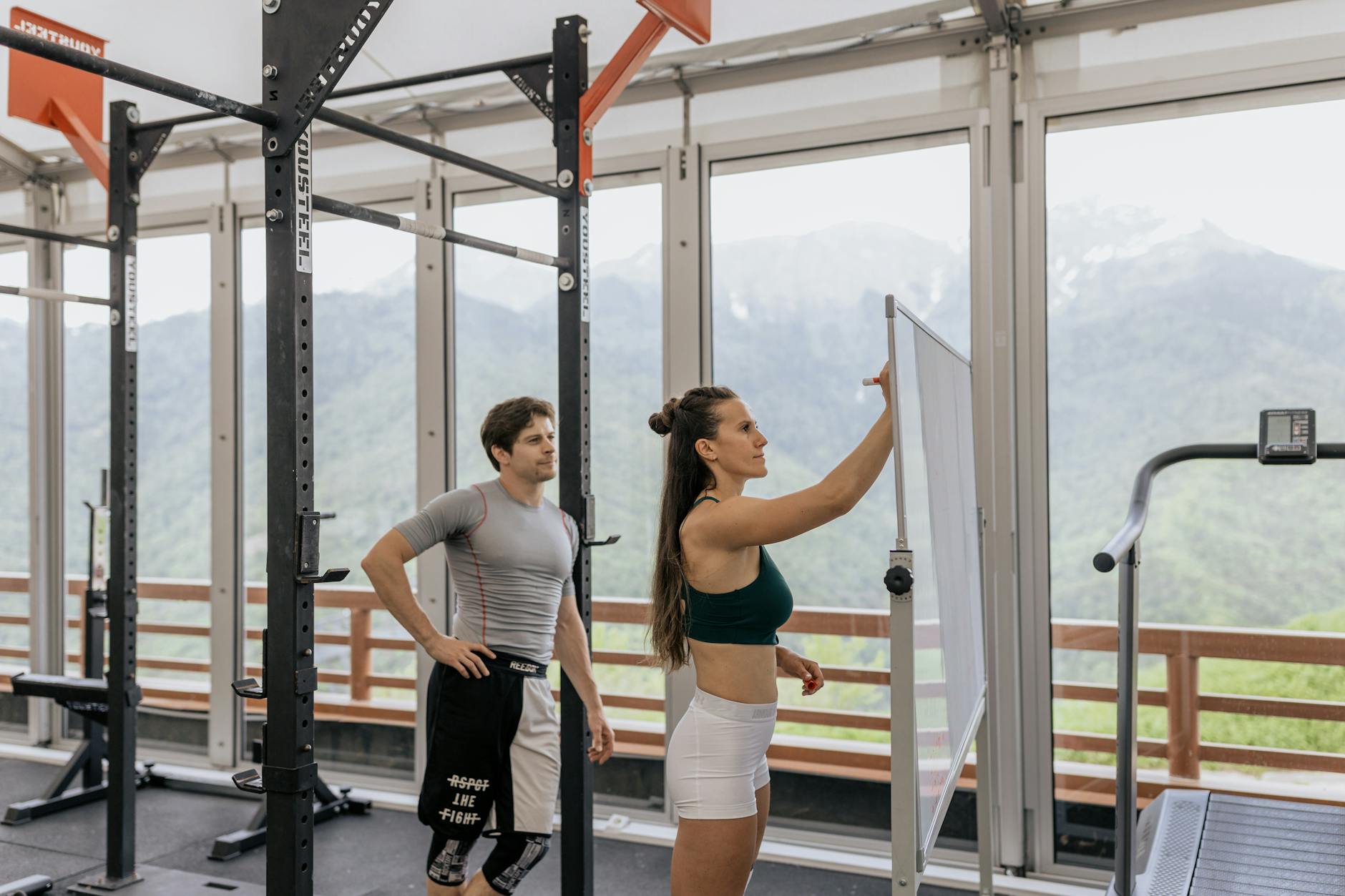
In busy workweeks, 3 sessions of 20–30 minutes work better than occasional long workouts.
- According to Statistics Netherlands, lack of time is the most commonly mentioned reason Dutch adults aged 25 to 45 say they don’t exercise as much as they want to.
- A tailored training plan that takes both training load and calendar pressure into account prevents drop-off far better than a generic weekly program.
- Mental coaching is the most overlooked factor: motivation doesn’t disappear because people are lazy, but because they don’t have a personal framework that supports consistency.
- Regularly adjusting the plan—for example when work pressure changes or seasons shift—is key to long-term results.
Why Lack of Time Is a Symptom, Not the Cause
Lack of time is the reason people mention most often when they stop exercising, but in practice it’s rarely the real problem. What usually makes things fall apart is the combination of a packed schedule, changing workdays, and no personal system to fall back on.
District-S sees this pattern time and again with entrepreneurs and professionals: the training routine works fine as long as the week is predictable. But as soon as an extra client meeting comes up, a business trip is booked, or workload temporarily spikes, training is the first thing to go. Not because the intention isn’t there, but because the system was never built to handle real life.
Research from Statistics Netherlands shows that lack of time is often the main reason people give for not exercising more. But the same data also suggests that, in most cases, the people saying this have never had personalized guidance. They’re following a plan that was designed for someone else.
More than half of the Dutch population (59%) experiences barriers to exercise or physical activity, with lack of time and health issues being the biggest personal obstacles, according to research by the Mulier Institute commissioned by Kenniscentrum Sport & Bewegen. Most of those people have a gym membership, but not guidance that actually fits their situation.
The All-or-Nothing Trap
One of the most common patterns is all-or-nothing thinking. In practice, there’s been a clear shift in fitness: instead of chasing short bursts of extreme effort, more people are choosing realistic routines that fit their lives. Someone who sees one missed workout as proof the whole week is ruined is much more likely to quit than someone who sees it as a single missed appointment inside a system that still works.
Take an account manager at a mid-sized IT company who trains three times a week at fixed times. During end-of-quarter weeks, when client meetings take over the calendar, at least one session gets dropped. Without a plan for that scenario, missed workouts pile up, the barrier to restarting gets higher, and within six weeks the routine is gone. But with a flexible anchor system—two fixed sessions and one movable session each week—continuity stays intact, even in hectic periods.
The Role of Mental Coaching
What busy professionals are usually missing isn’t more willpower—it’s support on the mental side. Motivation isn’t a personality trait; it’s the outcome of a system. Many people exercise primarily for their mental wellbeing: lower stress, better sleep, and a clearer head are some of the strongest reasons they keep going. Once those mental benefits become concrete, the relationship with training changes. Exercise stops feeling like an obligation and starts functioning as a tool.
That’s exactly where personal training in Eindhoven goes beyond a pep talk: the approach combines physical progress with awareness of personal patterns around energy, planning, and behavior.
Try this yourself:
- For 3 weeks, track which type of workday (quiet, average, hectic) lines up with missed workouts. The pattern will become obvious quickly.
- Create a training version for each type of day: a full session, a shortened 20-minute session, or an active recovery walk.
- Check whether all-or-nothing thinking sounds familiar. If it does, redefine what counts as a successful training week: not the number of workouts, but the number of weeks without dropping off completely.
- Talk to a trainer about the mental triggers that break your consistency, and which adjustments would actually help long term.
Fixed Workout Times vs. Flexible Anchors: A Practical Comparison
Flexible anchors are set training moments that can move within part of the day, but don’t get cancelled outright. In practice, that distinction matters more than almost anything else for people trying to stay active with an unpredictable work schedule.
What the Data Says About Consistency
According to data from the RIVM and Statistics Netherlands via the Lifestyle Monitor, in 2026 only 47% of the Dutch population met the national physical activity guidelines, while the government’s target is 75% by 2040. A big part of that gap can be explained by the absence of a schedule that fits the reality of changing workweeks.
The 2017 Physical Activity Guidelines from the Dutch Health Council recommend that adults get at least 150 minutes of moderate-intensity activity each week and do muscle- and bone-strengthening activities at least twice a week, reducing the risk of chronic conditions such as diabetes, cardiovascular disease, and depressive symptoms. That benchmark is realistic for busy professionals—if the structure is flexible.
Two Systems Compared
Below are the two most common approaches for professionals with changing work schedules:
| Aspect | Tailored approach (flexible anchors, District-S) | Traditional approach (fixed times, generic) |
|---|---|---|
| Training frequency during hectic weeks | At least 2 sessions protected through movable time slots | Usually 0–1 sessions due to calendar conflicts |
| Adjustment for training load | Weekly recalibration based on workload and recovery | Fixed plan, no adjustment unless the client intervenes |
| Mental coaching included | Yes, built into the coaching process | No, usually only as an add-on |
| Weekly prep time required | Usually 5–10 minutes for a calendar check and planning | 0 minutes (the plan is fixed, but drop-off is more common) |
| When adjustments happen | At every session through trainer check-ins and periodic reviews | Only once the person notices it’s no longer working |
| Barrier after a missed workout | Low: the system is built to absorb disruption | High: one missed session often breaks the routine |
Why Flexibility Is Not the Same as Being Loose
Flexibility can sound like lower standards, but the opposite is true. Maximum planning flexibility is exactly what makes training work for packed calendars and irregular hours—as long as the framework is clear. A personal trainer who knows when you’re traveling for work, presenting, or heading into a quieter week can match training load to that reality. That is fundamentally different from making a last-minute decision on your own about whether you’ll train or not.
Try this yourself:
- Divide your workweeks into 3 categories: quiet, normal, and hectic. Decide how many workouts are realistic in each category (for example 3, 2, 1).
- Set a minimum version for each category: what is the absolute floor that still counts as a successful week?
- Review your last 4 weeks: which category caused the most drop-off? That’s the point that needs adjusting—not your motivation.
- Ask a trainer to design a plan with built-in flexibility, where 80% of sessions happen as scheduled and 20% can move around.
Which Approach Fits Your Situation?
Personal coaching for busy professionals is not just about efficiency—it’s about continuity. If you train without guidance, you’re the one deciding under pressure whether the session happens. If you work with a trainer, there’s an external anchor that takes part of that decision off your plate.
Personal training has been in the top 10 fitness trends for years; NL Actief reports that more than 5.500 certified personal trainers are listed in the industry register, reflecting the sharp rise in demand for personalized coaching in the Netherlands.
The Value of External Accountability
A personal trainer creates accountability: you know someone is expecting you, and your session is ready to go. That matters most on the days when you’re tired, doubting yourself, or tempted to skip it. It’s not a psychological trick—it’s a structural change in how decisions are made when you’re under time pressure and mentally drained.
Take a self-employed business owner at a growing professional services company. During calmer periods, they train 3 times a week without much trouble. But during a growth phase—with new clients, longer workdays, and weekend emails—their training frequency drops to zero within a month. With every missed week, restarting feels harder. In a structured coaching setup where a trainer reviews progress weekly, adjusts the plan to workload, and addresses mental patterns, continuity survives even during growth-heavy periods. Not perfectly, but effectively.
If you’re debating whether to switch to a more personal approach, the article on building exercise discipline as a busy professional breaks down the factors that matter most.
When a Private Gym Makes the Difference
The environment matters too. In a crowded commercial gym, waiting for equipment, limited availability, and social distractions are all real reasons people cut a session short—or skip it entirely. In 2026, it’s clearer than ever that people don’t stay active through motivation alone, but through structure and connection: smaller gyms, fixed training moments, and personal coaches create an environment where clients feel seen and supported.
For clients in Eindhoven, District-S offers that through private gym locations at Strijp-S and in the city center: no waiting times, full attention from the trainer, and an environment built around one goal—efficient, focused training. The approach of a luxury gym in Eindhoven is built on exactly that combination of quality, calm, and structure.
Try this yourself:
- Answer these 3 questions honestly: (1) How often have you cancelled a planned workout in the last 3 months? (2) What was the most common reason? (3) What external factor could have prevented it?
- If the answer to question 1 is more than 3 times, consider a structure with external accountability.
- Check whether your current training environment adds waiting time or distractions that raise the barrier. If it does, calculate how much time that costs you each month and compare it to alternatives.
- Book a trial session or intake with a personal trainer to test whether a more structured setup suits you better than training on your own.
Frequently Asked Questions
How do you stay consistent with exercise when you have an irregular workweek?
Staying consistent with an unpredictable work schedule requires a different system than a fixed weekly plan. The most effective approach is to use flexible anchors: two fixed training days and one movable session each week, so one busy day doesn’t derail the entire week. In practice, people who combine that with a trainer who adjusts the plan weekly based on workload experience far less drop-off than people following a generic program. It also helps to define in advance what your minimum workout version is for a hectic week, so “doing less” never turns into doing nothing.
How many times a week is it realistic for a busy professional to work out?
Twice a week of focused training is the most realistic and effective long-term frequency for many busy professionals. The Dutch Health Council guidelines recommend that adults do muscle- and bone-strengthening activities at least twice a week, which makes 2 purposeful sessions a strong baseline. Training 3 times a week can produce better results—but only if you can actually sustain it. In the long run, 2 high-quality sessions every week are far more valuable than 3 sessions that disappear as soon as work gets hectic. In one-to-one coaching, each session can also be structured so the return on your training time is higher than when you train independently.
Why doesn’t a generic workout plan work for professionals with changing workdays?
A generic workout plan assumes a predictable weekly rhythm—and for most entrepreneurs and professionals, that simply doesn’t exist. One-size-fits-all training schedules are increasingly outdated. More people now train with personalized programs tailored to their level, goals, and recovery capacity, making exercise both more effective and easier to maintain. If a plan doesn’t account for high-pressure work periods, travel, or unexpected meetings, drop-off is almost inevitable. A tailored approach that links training load to the actual demands of the week is much more resilient.
How does District-S help professionals stay consistent with training?
District-S combines one-to-one personal training with tailored nutrition plans and mental coaching, specifically for busy professionals and entrepreneurs in Eindhoven. The approach includes regular recalibration of the training program: when workload changes, projects shift phase, or energy levels fluctuate, the plan changes too instead of being followed blindly. Alongside physical coaching, the mental coaching component helps clients identify patterns around motivation, energy, and behavior—often the deciding factor between short-term effort and lasting results for people with irregular workdays. You can find more information about the approach and a free trial session on the District-S website.
What’s the difference between motivation and structure when it comes to staying active?
Motivation is temporary; structure lasts. Motivation tends to peak at the start of a program and fade once life gets busy or progress feels slower. Structure—in the form of fixed anchors, external accountability, and a plan for high-pressure periods—keeps the routine intact even when motivation drops. Consistent training through busy or low-motivation periods delivers better results than occasional bursts of maximum effort. The combination of a personal framework and a trainer who adapts with your schedule creates the strongest foundation, because it reduces how much you need motivation to carry the process. If you want to go deeper into this, the article on staying motivated with a packed schedule offers practical insights.
Conclusion
Staying active with an irregular workweek isn’t about trying harder or becoming more disciplined. It’s a systems issue. People who follow a plan built around the reality of changing workdays—with flexible anchors, a minimum version for busy weeks, and external accountability—consistently get more out of their training time than people relying on motivation and a generic weekly schedule.
The most underestimated factor remains the mental side: the patterns around planning, energy, and behavior that show up fast when workload rises. That’s exactly where professional guidance makes the difference. For professionals in Eindhoven who want to take a practical first step, District-S offers a free trial session.
Would you like to learn how we can assist you with personal training?
Sources
- Centraal Bureau voor de Statistiek — Cbs
- Mulier Instituut — Kenniscentrumsportenbewegen
- RIVM en CBS via de Leefstijlmonitor — Sportenbewegenincijfers
- Beweegrichtlijnen 2017 van de Gezondheidsraad — Gezondheidsraad
- NL Actief — Sportknowhowxl
- 4. Sporten en bewegen | CBS Longread: On- gezonde leefstijl 2022 — Centraal Bureau voor de Statistiek (CBS)
- Tijd en gezondheid grootste belemmeringen voor sporten en bewegen in de openbare ruimte — Kenniscentrum Sport & Bewegen / Mulier Instituut
- Beweegrichtlijnen | Sport en bewegen in cijfers — RIVM / CBS – Gezondheidsenquête/Leefstijlmonitor