
Quick Summary
Premium personal training is about far more than spending an hour exercising with a coach. You’re paying for a combination of tailored programming, nutrition guidance, mental coaching, and the expertise of a certified trainer who actively tracks your progress. If you only compare the hourly rate, you miss the real return on your investment.
- Personal training rates in the Netherlands typically range from €50 to €150 per session, depending on experience, location, and what’s included
- At a private gym like District-S, the space, the attention, and the coaching are entirely focused on you
- Mental coaching in sport is scientifically supported as a tool for improving performance
- A complete package that combines training, nutrition, and mental coaching delivers fundamentally different results from one-off sessions
- Personal training has ranked among the top 10 global fitness trends since 2007 (ACSM trend report, via NL Actief)
Why the Hourly Rate Can Be Misleading
Picture this: two personal trainers, both charging €75 per hour. The first works in a busy commercial gym, has limited availability, and offers no support between sessions. The second trains you in a private gym, updates your program every week, sends tailored meal guidance, and checks in on the mental side of your progress after each session. Same price, completely different value.
That’s exactly where people go wrong when they compare personal trainers based on price alone. According to Ruggengraat.com, personal training in the Netherlands costs an average of €50 to €90 per session. That’s a wide range, but what’s actually included can vary dramatically.
What a Trainer Really Does Outside the Session
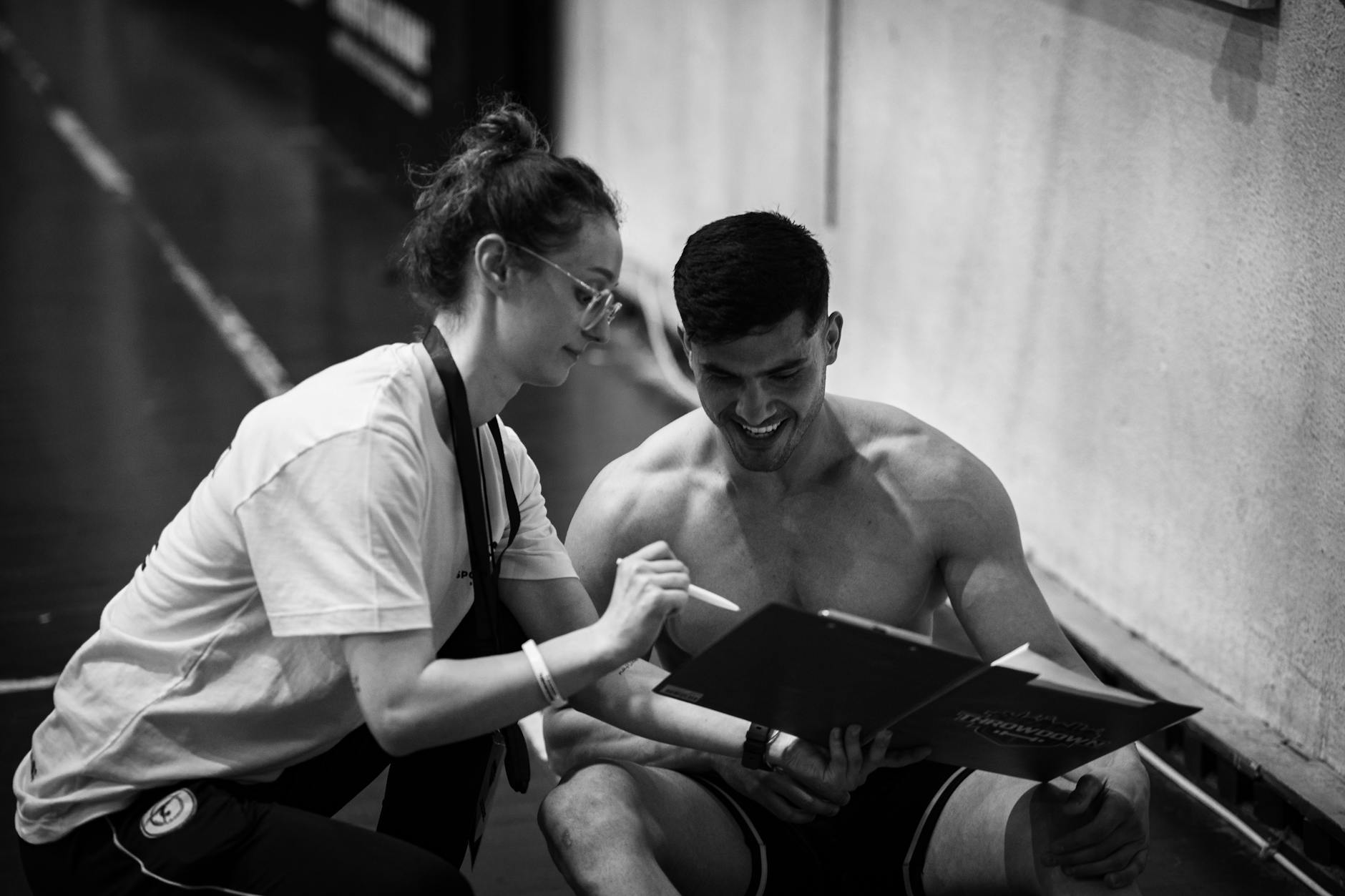
A professional trainer often spends more time outside your session than during it. That includes writing personalized programs, analyzing progress based on measurements, answering questions between sessions, and adjusting the plan around changes in your schedule, recovery, or injuries. Ruggengraat.com puts it well: “You’re not paying for an hour of movement. You’re paying for expertise, a tailored plan, and someone who keeps you accountable.”
That also explains why specialist trainers typically charge more than beginners. According to Trustoo.nl, specialists focused on areas like rehabilitation, strength, or nutrition usually charge between €90 and €120 per hour, compared with €40 to €60 for trainers at the start of their careers.
The Hidden Cost of Cheap Coaching
In practice, lower prices often mean less prep work, no follow-up, no nutrition support, and minimal attention to injury prevention. If that leads to slower progress or a setback after an injury, you can easily end up paying more in the long run. The real comparison isn’t cost per session. It’s results per euro.
What to ask before you commit:
- Ask exactly what’s included in the rate during the intake: programs, nutrition, and between-session support
- Check whether the trainer is certified and has experience with your specific goal
- Compare the full package over three months, not just the single-session rate
- Ask how your progress will be measured and how often
What’s Included in a Premium All-in Package?
A premium personal training package brings together everything that drives results in one ongoing coaching plan. It goes well beyond the training sessions themselves.
District-S combines one-to-one training with tailored nutrition plans and mental coaching, so members don’t just get stronger or leaner. They also build the habits and mindset needed to make those results last. That isn’t a luxury add-on. It’s the core of what actually works.
Training: Frequency and Programming
For measurable improvements in strength, fitness, or body composition, most people need two to three sessions per week, depending on their goal and starting point. Ruggengraat.com uses two sessions per week as the most common benchmark, with a typical monthly investment of €400 to €640 when working with a professional trainer. One session per week is usually better suited to maintenance or as support alongside independent training.
District-S works with weekly updated programs. That helps prevent your body from adapting too quickly and keeps the stimulus for muscle growth and improved fitness high, something fixed routine-based programs in large gyms often fail to do.
Nutrition: The Piece Most People Underestimate
Training without the right nutrition usually leads to slower results, especially for people with busy schedules. A personal trainer who only coaches the workouts and says nothing about food is only addressing half the picture. Tailored nutrition advice, adjusted for training days, recovery days, and your weekly routine, is a built-in part of what District-S offers.
If you want practical guidance on how to eat around your workouts, this article on what to eat before and after a workout offers useful next steps.
Mental Coaching: The Element Most Trainers Leave Out
This is the most overlooked part of premium coaching. Scientific research involving elite athletes at the highest level shows that athletes perform better when they train their mental skills. Mental training is defined there as “an umbrella term for all activities aimed at learning mental skills in order to improve sports performance.”
For entrepreneurs and professionals balancing training with stressful workweeks, this matters even more. The pattern District-S sees in this type of client is consistent: the mental hurdle, postponed sessions, the struggle to restart after a holiday. That’s usually the real reason people quit. Not a lack of physical ability.
What to look for:
- Ask whether mental coaching and behavior-focused conversations are part of the sessions
- Check whether your plan accounts for high-stress weeks, not just ideal weeks
- Find out whether your trainer is available for quick questions between sessions
- After four weeks, ask yourself: does the plan fit your life, or are you forcing your life to fit the plan?
What Makes a Private Gym Different From a Regular Gym?
A private gym is a training space reserved exclusively for your session, with no waiting for equipment, no side glances, and no distractions from a crowded gym floor.
That may sound like a comfort upgrade, but it has a direct impact on training efficiency. In a busy gym, a trainer can easily lose several minutes each session waiting for equipment, adjusting the flow around peak-hour crowds, or navigating the environment. In a private gym, the full session is productive.
The Psychology of a Private Environment
For many people, especially busy entrepreneurs and professionals, the barrier to joining a large gym is higher than they want to admit. Not because of the training itself, but because of the setting: packed changing rooms, crowded floors, and the feeling of being watched. In a private gym, that barrier largely disappears.
District-S has locations in Strijp-S and Eindhoven city centre, both designed as calm, high-end environments. That lowers the mental threshold not just to start, but to keep showing up. The approach behind luxury private gyms in Eindhoven shows how environment, routine, and quality control work together to create lasting results.
Continuity as a Competitive Advantage
One of the most common reasons people stop going to large gyms is inconsistency: the trainer changes, the program doesn’t evolve with their progress, or the coaching is too occasional to make a real difference. At District-S, you work with the same trainer throughout your journey, someone who knows your history and adjusts your program based on what’s happening in your life.
What to check for yourself:
- Book a trial session or intake to see whether the environment is genuinely private
- Ask whether you’ll keep the same trainer throughout your program or be passed around
- Decide whether the location realistically fits your work schedule: early morning, lunch break, or evening
- Compare not just the monthly fee, but the total value over a 12-week period
Real-World Example: What an Entrepreneur Can Achieve in 12 Weeks
Imagine an entrepreneur working at a mid-sized service company, putting in around fifty hours a week and getting very little structured exercise. He has tried memberships at big gym chains before, but each time stopped after a few weeks because of time pressure and a lack of direction.
With a premium personal training concept like District-S, a realistic 12-week journey often looks like this:
1. Weeks 1-2: Intake, body composition assessment, and a training and nutrition plan built around the client’s work schedule
2. Weeks 3-6: Build-up phase with two sessions per week, plus independent activity based on trainer-written programming
3. Weeks 7-9: Progress review using measurable markers, followed by adjustments to the training plan and nutrition targets
4. Weeks 10-12: Intensification phase focused on a specific goal such as strength, body composition, or fitness, plus a plan for maintaining momentum afterward
After twelve weeks, this type of program can realistically lead to noticeable improvements in strength, body composition, and energy levels. The exact outcome differs from person to person, but in practice the most valuable result is usually the structural change: a consistent routine and a plan that fits the schedule instead of fighting against it.
If you want to learn how to build a sustainable training routine as a business owner, this article on sticking with training when you have a packed schedule as an entrepreneur offers practical guidance.
Price Comparison: What Do You Get for Your Money?
The personal training market in the Netherlands ranges from basic coaching to fully integrated premium concepts. The table below compares the main tiers across the criteria that matter most.
| Feature | Large Gym Chain | Freelance Trainer (Average) | Premium Private Gym (District-S Level) |
|---|---|---|---|
| Session price (estimate) | €30-€60 | €60-€90 | €90-€150 |
| Private training space | No | Sometimes | Always |
| Weekly updated program | Rarely | Depends on the trainer | Standard |
| Nutrition plan included | No | Optional (+€50-€150 extra) | Included |
| Mental coaching | No | No | Included |
| Same trainer throughout the program | Rarely | Yes | Yes |
| Structured progress reviews | Irregular | By appointment | Ongoing |
Source: compiled using market data from Ruggengraat.com, Trustoo.nl, and EFAA, 2024-2026.
Mental Coaching in Fitness: Not a Bonus, but a Core Component
Mental coaching in sport is scientifically defined as the systematic training of skills such as self-confidence, concentration, motivation, and resilience, with the goal of improving athletic performance over time.
Research published via ResearchGate confirms that athletes who train their mental skills perform measurably better. It also improves technical execution, helping athletes reach their highest personal level.
How seriously is this taken in elite sport? According to NOC*NSF, every TeamNL centre has a Coordinator for Performance Behaviour and Mental Health, trained as a healthcare or clinical psychologist, who oversees a regional network of specialists providing tailored guidance for athletes, coaches, and staff.
What Mental Coaching Looks Like in Personal Training
In personal training, mental coaching translates into practical interventions: setting and reframing goals, dealing with low-motivation weeks, using visualization techniques to stay consistent, and building an identity around training that doesn’t depend on how you feel that day.
District-S builds this into regular coaching. That means your trainer doesn’t just ask how the workout felt, but also how your week went, what was going on mentally, and whether next week’s plan needs to be adjusted. It sounds simple, but that’s exactly the piece most concepts leave out.
When Mental Coaching Makes the Difference
For people with demanding jobs, high stress levels, or a history of falling off track with exercise, mental coaching is often the deciding factor. Research repeatedly shows that mental training, alongside technical, tactical, and physical training, is essential for performing at your best. That applies just as much to recreational exercisers who simply want to stay consistent.
For a closer look at how this works in practice, this article on mental coaching in personal training in Eindhoven explains the approach in more detail.
What to discuss in your intake:
- Ask whether mental coaching is explicitly included in the program
- Talk through the mental patterns that have derailed you in the past
- Track which sessions you miss in the first four weeks and why
- Use that pattern as the starting point for a conversation about planning and support
Frequently Asked Questions
How much does personal training cost at a premium concept like District-S?
Premium personal training in the Netherlands usually costs more than the standard market rate of €50 to €90 per session, because the service includes a full coaching package. At a concept like District-S, the price covers one-to-one sessions in a private gym, tailored nutrition plans, and mental coaching. The exact investment depends on the package you choose, such as one or two sessions per week, and the length of the program. A free trial session lets you get to know the approach before making a decision.
Why would a busy professional choose a private gym over a regular gym?
A private gym removes everything that takes time without adding training value: waiting for equipment, crowded spaces, and inconsistent trainer availability. For entrepreneurs who may only have thirty to sixty minutes per session, every minute matters. On top of that, the private setting lowers the barrier to starting and staying consistent, which is one of the biggest factors in long-term success.
How does District-S approach mental coaching in fitness?
Mental coaching in sport is not a separate add-on at District-S. It’s a fixed part of every program. During sessions, trainers actively discuss how the week has gone mentally, which patterns are getting in the way, and how the plan can be adapted during busier periods. That aligns with what research consistently shows: people who train their mental skills perform better over time and are less likely to drop off when setbacks happen.
How many sessions per week do you need to see visible results?
Two sessions per week is widely seen by personal trainers as the most effective frequency for people who also stay active on their own. At that pace, noticeable improvements in strength, fitness, or body composition are often visible within eight to twelve weeks, provided nutrition and recovery are addressed as well. One session per week is usually best viewed as a supplement to your own activity, not the main driver of change.
What makes personal training at District-S different from a large gym chain?
The biggest difference is the integration of training, nutrition, and mental coaching into one connected system, delivered in a private environment with the same trainer throughout the entire program. Large chains typically offer stand-alone sessions, rotating trainers, and little to no structured progress review. District-S uses weekly updated programming, actively tracks progress, and adapts the plan to what’s happening in the client’s life rather than relying on a one-size-fits-all template.
Conclusion
The answer to what you’re really paying for in premium personal training isn’t found in the hourly rate. The real value lies in what happens beyond the session: preparation, progress analysis, nutrition guidance, and the mental coaching that keeps you training even when life gets in the way.
Fitness is by far the most popular sport in the Netherlands, but for most people that doesn’t automatically lead to the results they want. If you want those results, you need a complete approach, not just a membership.
For clients in Eindhoven, District-S offers exactly that: one-to-one coaching in a private gym in Strijp-S or the city centre, with tailored training, nutrition, and mental coaching. The free trial session is the easiest way to see whether the approach fits your goals and schedule. You can find more information about the concept and services at District-S personal training Eindhoven.
Sources
- Volgens Ruggengraat.com — Ruggengraat
- Volgens Trustoo.nl — Trustoo
- Wetenschappelijk onderzoek met topsporters op wereldniveau — Researchgate
- EFAA — Efaa
- Volgens NOC*NSF — Nocnsf
- Onderzoek wijst keer op keer uit — Nlsportpsycholoog
- Fitness is met afstand de meest beoefende sport in Nederland — Crossathletes
- Kosten Personal Training Nederland: Prijzen 2026 + Vergelijking — Ruggengraat.com