
At District-S, we see the same pattern again and again with busy professionals: personal training without fixed time slots works very well, as long as the structure of a recurring appointment is replaced by something even more effective—a personalized training plan, direct coaching, and a measurable system for tracking progress. If you want flexibility because your schedule leaves little room for the gym, lasting results only happen when freedom doesn’t turn into vagueness. That’s where the real difference lies between training whenever you happen to have time and following a plan you can actually stick to.
Introduction
- For many busy professionals, a 50-minute one-on-one session delivers more in practice than 90 minutes of training alone
- According to NL Actief, demand is growing for fitness solutions that don’t depend on fixed class times
- Structure does not come from the clock—it comes from the process: goals, progress tracking, and coaching
- For most people, freedom without guidance leads to drop-off, not results
Introduction
Your calendar is packed. A fixed workout every Tuesday at 7:00 a.m. sounds realistic in week one, but after cancelling for the third time because of an early client call, it becomes obvious: this schedule doesn’t work for you. That’s not a willpower issue. It’s a planning issue.
What District-S consistently sees with busy professionals is that resistance to exercise rarely comes down to motivation. The real problem is trying to fit a traditional gym routine around project deadlines, travel, and family life. The question is not whether you want to train. The question is whether the system can adapt to real life.
That is exactly what this article explores: does one-on-one personal training without fixed time slots actually work? And under what conditions does it deliver results instead of turning flexibility into just another excuse? We’ll look at the data, the real-world experience, and the nuance in between.
What the numbers say about exercise and consistency
Exercise as a baseline requirement is clearly defined in the Netherlands. According to the 2017 Physical Activity Guidelines from the Health Council, adults should get at least 150 minutes of moderate-intensity exercise per week and do muscle- and bone-strengthening activities at least twice a week.
In reality, many people fall short. Data from Sportenbewegenincijfers.nl (CBS/RIVM) shows that in 2026, only around 47% of the Dutch population met those guidelines. The government’s target is 75% by 2040. That leaves a major gap—and that gap will not be closed simply by selling more memberships at big-box gyms.
The fitness industry is growing, but consistency is slipping
According to POS (citing Mulier Instituut), the share of people in the Netherlands aged 12 to 79 who do fitness training weekly rose from 14% in 2001 to roughly 27% in 2022. More than 3,9 million people visit a fitness club. But working out weekly is not the same as consistently meeting the activity guidelines. Most people stop or scale back the moment their schedule becomes too tight.
Fixed time slots are often the bottleneck
The pattern is familiar: a professional joins a gym, picks a few regular training times, and after six to eight weeks the plan starts to collapse under work pressure. The problem is not motivation. It is rigidity. Research on habit formation shows that building a training habit usually takes six to eight weeks. If you miss too many sessions during that period, the routine never really gets established.
Self-check:
- Count how many planned workouts you cancelled over the past month because of work or scheduling conflicts
- If it happened more than twice, a fixed schedule probably doesn’t match your reality
- Ask yourself whether those cancellations were occasional or structural, such as project pressure or frequent travel
- If they are structural, a flexible plan with a dedicated trainer may suit you better than fixed time slots
Why flexible scheduling without coaching often backfires
Flexibility sounds ideal, but for most people it cuts both ways. Without external coaching, scheduling freedom usually leads busy professionals to train less consistently—not more.
Trainingunit.nl describes this pattern well: one of the biggest mistakes in solo training is not having a clear goal or plan. Without a plan, people waste time on exercises that do little to move the needle. Add an unpredictable schedule to the mix, and the odds of seeing real progress drop fast.
The difference between flexible and optional
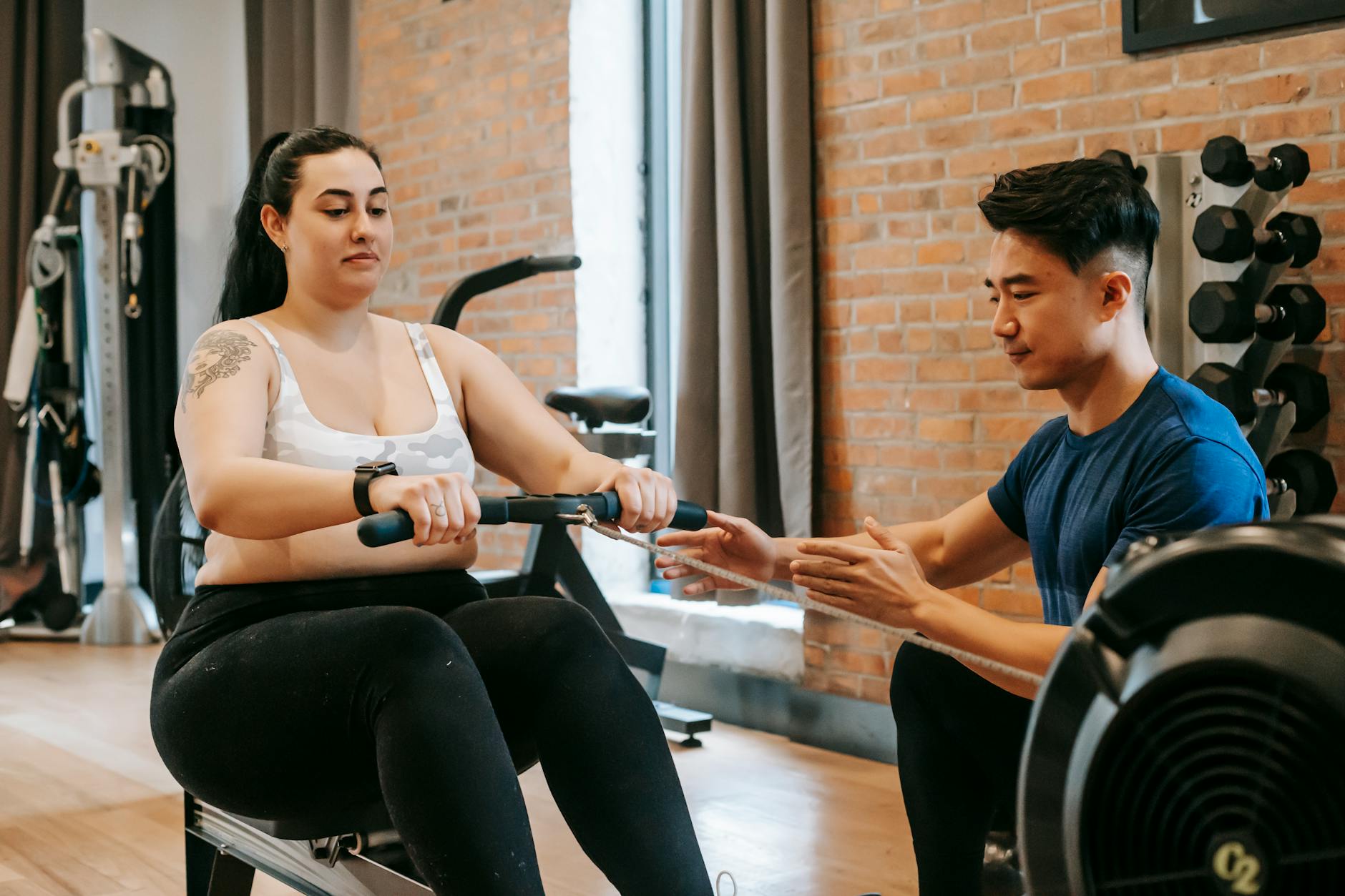
Flexible training is not the same as casual training. Flexible means you choose the time, while the trainer controls the content, monitors progress, and keeps you accountable. Casual means you go when it suits you, do whatever you feel like, and stop when life gets in the way.
The difference is in the structure behind the system—not the time on the calendar. A certified personal trainer who builds your sessions week by week ensures that even a last-minute Thursday afternoon workout still has a clear purpose. The schedule is flexible. The method is not.
Accountability is the missing piece
One major reason personal training works better for busy professionals than a standard gym membership is psychological: you have an appointment with someone. That appointment is much harder to ignore than a workout you casually pencilled in for yourself.
According to CK Active, personal training offers “fixed appointments and someone who holds you accountable.” That external accountability keeps people on track, even on low-motivation days.
Self-check:
- Ask yourself whether you skipped self-planned workouts more than once a month over the past quarter
- If yes, external accountability—a trainer or a session you have already paid for—is probably the missing factor
- If no, you may have enough self-discipline for a hybrid approach with less frequent coaching
- Treat sessions as business appointments in your calendar, not loose intentions
Real-world example: the entrepreneur with an unpredictable schedule
Picture a typical scenario: a self-employed business owner at a mid-sized service company in Eindhoven wants to train twice a week. Previously, he trained at a regular gym on a fixed Monday and Thursday schedule. In reality, he managed one of those two sessions most weeks, because client meetings and travel kept disrupting the plan.
After switching to one-on-one training without fixed time slots, the pattern changes. Sessions are booked through an online calendar, usually 24 to 48 hours in advance, based on that week’s availability. The trainer tracks the weekly training schedule, adjusts the workload based on fatigue or stress, and makes sure both sessions happen—even if that means early Tuesday morning and Friday afternoon.
In practice, this kind of setup creates visible improvements: a higher session completion rate (usually both planned sessions instead of one), shorter workouts (around 50-55 minutes instead of 90 minutes including waiting and wandering around a large gym), and a clearly stronger sense of control over the training process.
Comparison: with and without flexible one-on-one coaching
| Factor | Standard gym, fixed schedule | Flexible one-on-one coaching |
|---|---|---|
| Session length | Usually 75-90 min including waiting | Usually 45-55 min, fully used |
| Weekly frequency achieved | Average 1 of 2 planned sessions | Average 1,7 to 2 of 2 sessions |
| Adjustments for fatigue | None; you either do the plan or skip it | Trainer adjusts the load in real time |
| Progress tracking | Informal or absent | Weekly through coach and progress plan |
| Injury risk from overload | Higher without technique correction | Lower due to direct coaching |
| Personalized nutrition advice | Not included | Included in a full program |
The table makes one thing clear: the advantage of flexible one-on-one coaching is not just better scheduling. It is greater overall efficiency across the entire process.
Self-check:
- Calculate how much training time you actually used over the past month, not just what you intended to do
- If you completed less than 60% of your planned sessions, the issue is probably your scheduling model, not your motivation
- Compare the time you really spend each week at a large gym with what 2x 50 minutes of one-on-one training could deliver
- If the time investment is similar but the results are not, look closely at the quality of coaching
What makes flexible one-on-one training effective?
One-on-one coaching is the reason flexible personal training succeeds where flexible solo training often fails. The personal trainer becomes the structure that replaces the fixed appointment.
The fitness industry has professionalized significantly in recent decades. Industry body NL Actief lists more than 5.500 qualified personal trainers in its professional register. That reflects both the growth of the field and the fact that quality varies widely. Not every trainer delivers the same level of guidance.
What a good trainer does outside the session
An effective personal trainer is not just someone who forwards you a list of exercises. A good trainer monitors progress, spots signs of overload, adjusts the plan when life changes—travel, poor sleep, high stress—and maintains continuity from week to week. That is why a flexible schedule can work under coaching: the trainer is the constant, not the time slot.
The ACSM 2026 trend report, published via NL Actief, notes that “coaches are becoming increasingly important as filters, interpreters, and advisors: when is intensity appropriate, and when is recovery the better choice?” That role fits busy professionals perfectly, especially those who do not have the headspace to manage these decisions themselves.
The role of personalized nutrition advice
A personalized nutrition plan is not separate from training results. Many professionals know in theory what they should eat, but real life—long workdays, business lunches, travel—rarely looks like the theory. A personal trainer who also offers nutrition coaching bridges that gap. It also helps prevent unnecessary supplement use: a personalized nutrition plan shows whether you truly need extra support or whether the basics simply are not dialled in yet.
For clients in Eindhoven, District-S combines one-on-one personal training, personalized nutrition plans, and mindset coaching into one integrated approach. You can read more about how that works in practice on the District-S program page.
Self-check:
- Ask your trainer directly how progress is tracked: weekly or every two weeks?
- If your program does not include nutrition guidance, that is often why strength improves while body composition does not
- Check whether your trainer adjusts the plan based on your feedback or keeps recycling the same routine
- If your trainer covers all three—adjustments, tracking, and nutrition—the risk of dropping off is much lower in practice
When flexible training does not work: the pitfalls
Flexible scheduling is not a universal fix. In some cases, a fixed routine is exactly what someone needs, and in others, too much flexibility gets in the way of progress.
The three most common pitfalls
The first pitfall: flexibility becomes an excuse. If sessions get pushed back week after week and never actually happen, the issue is no longer planning—it is priority. A trainer can only guide you if you show up.
The second pitfall: recovery is not protected. When people schedule flexibly, they can accidentally place two hard sessions too close together or leave too long a gap between workouts. A good trainer manages workload across the week, even if the time slots change.
The third pitfall: not enough frequency. For visible improvements in strength and body composition, training twice per week is usually the practical minimum. If flexibility consistently leaves you with only one session per week, progress will be slow at best.
A blunt self-assessment helps here: if you completed less than 75% of your planned sessions over the past four weeks, the answer is not more flexibility—it is more guidance. Also see the article on one-on-one training and faster results in less time for a practical overview of what an effective coaching program should include.
Self-check:
- Review the past four weeks: how many sessions did you plan, complete, reschedule, and never make up?
- If more than 25% did not happen, book a review with your trainer to identify what is getting in the way
- If you managed two sessions per week but results have stalled, assess whether the training intensity and progression are high enough
- If one session per week is your realistic maximum, ask your trainer whether shorter, more intense sessions can help make up the difference
The right environment matters more than people think
A private gym makes flexible personal training even more effective in ways large chain gyms simply do not: no waiting for equipment, no distractions, no awkwardness while doing rehab or injury-specific exercises. The environment lowers the barrier to showing up, especially on days when staying home feels more appealing.
District-S uses that model in luxury private gyms across multiple Eindhoven locations (Strijp-S and City Centre). The combination of a calm, exclusive setting and fully tailored one-on-one coaching means even a last-minute Wednesday morning session runs smoothly—no queues, no noise, no wasted time.
If you want to compare what this kind of setting offers versus a regular gym, also read the article on private gym vs gym in Eindhoven: what gets results faster.
Self-check:
- Ask yourself whether your current training environment is one of the reasons you skip sessions
- Waiting times, crowds, and lack of privacy are real friction points—not excuses
- Try a session in a private gym: if your focus and efficiency improve, the environment is clearly affecting your results
- Calculate the time saved: less travel time and less waiting can easily save 20-35 minutes per session
Frequently Asked Questions
Does personal training without fixed time slots work as well as a fixed schedule?
Flexible personal training can deliver results that are just as good—or better—than a fixed schedule, provided the coaching and training plan still create structure. The structure is in the process, not the time slot. If you schedule flexibly but still complete two sessions per week with a dedicated trainer who tracks progress, you will usually do better than someone with a fixed plan they keep interrupting.
How many sessions per week do you need for visible results?
Two sessions per week is generally the practical minimum for visible improvements in strength and body composition. One session a week usually maintains your current level but produces limited progress, unless the intensity and the nutrition and recovery plan are exceptionally well aligned. If your busy schedule keeps you at one session per week, discuss with your trainer whether session intensity or duration can be adjusted to compensate.
How does District-S help professionals with unpredictable schedules?
District-S offers flexible membership options that allow sessions to be booked around the client’s actual schedule rather than a fixed timetable. Certified personal trainers oversee the weekly training plan, progress, and nutrition guidance, so the structure stays intact even when appointment times change. Clients in Eindhoven can start with a free trial session to see whether the approach fits their lifestyle.
What is the difference between a private gym and a regular gym when training flexibly?
A private gym removes the waiting times and distractions that often reduce actual training time in large commercial gyms. That matters even more when your sessions are booked flexibly: a last-minute workout only has value if it runs efficiently. In a busy gym, finding available equipment and adapting your workout on the fly can easily cost 15-25 minutes per visit. In a private gym, you can start right away.
How do I know whether flexible one-on-one coaching is better for me than training alone?
Training alone can work for people with plenty of exercise experience, clear goals, and strong self-discipline. Most busy professionals are missing at least one of those three. If you skipped planned workouts more than twice last month, or your results have stalled despite regular training, coaching is usually the missing variable. In most cases, an honest conversation with a certified personal trainer makes the bottleneck obvious very quickly.
Conclusion
Personal training without fixed time slots works—but not automatically. Flexible scheduling is a real advantage for busy professionals who cannot tie their week to a traditional gym timetable. The key condition is that the structure normally provided by a fixed schedule must be replaced by a proper coaching system: a personal trainer who tracks progress, a personalized training plan that is adjusted week by week, and nutrition guidance that supports the outcome.
Without that support, flexible scheduling is just a softer word for inconsistency. With it, it becomes one of the most effective ways for busy professionals to train consistently alongside a demanding schedule.
If you want to find out whether this approach suits your situation, you can start with a free trial session at one of the District-S locations in Eindhoven. Learn more about the approach and available programs at District-S personal training Eindhoven.
Would you like to learn how we can assist you with personal training?
Sources
- NL Actief — Sportknowhowxl
- Beweegrichtlijnen 2017 van de Gezondheidsraad — Gezondheidsraad
- Sportenbewegenincijfers.nl (CBS/RIVM) — Sportenbewegenincijfers
- POS (met verwijzing naar Mulier Instituut) — Pos
- Onderzoek naar gewoontevorming — D-healthy
- Trainingunit.nl beschrijft dit patroon treffend — Trainingunit
- CK Active — Ckactive
- Beweegrichtlijnen 2017 — Gezondheidsraad