
Quick summary
Losing fat fast with personal training works best when you combine targeted strength training, a daily calorie deficit of 300-500 kcal, and proper recovery. In Eindhoven, more and more busy professionals are choosing premium personal training because this approach delivers measurable results within 8-12 weeks.
- Strength training + interval cardio: 3 guided high-intensity sessions per week
- Nutrition protocol: Daily protein intake of 1.6-2.2 grams per kilo of body weight
- Calorie deficit: Controlled fat loss of 0.5-0.8 kilos per week
- Sleep optimization: At least 7 hours of sleep per night to support hormone balance
- Progress tracking: Weekly measurements of body fat percentage and muscle mass
Why most diets fail when the goal is fat loss
A marketing manager at a tech company in Eindhoven lost 15 kilos in 6 months on a popular diet, only to regain it all within a year. District-S sees this pattern all the time with new members: short-term weight loss followed by rebound weight gain because the focus was only on eating less, without preserving muscle mass.
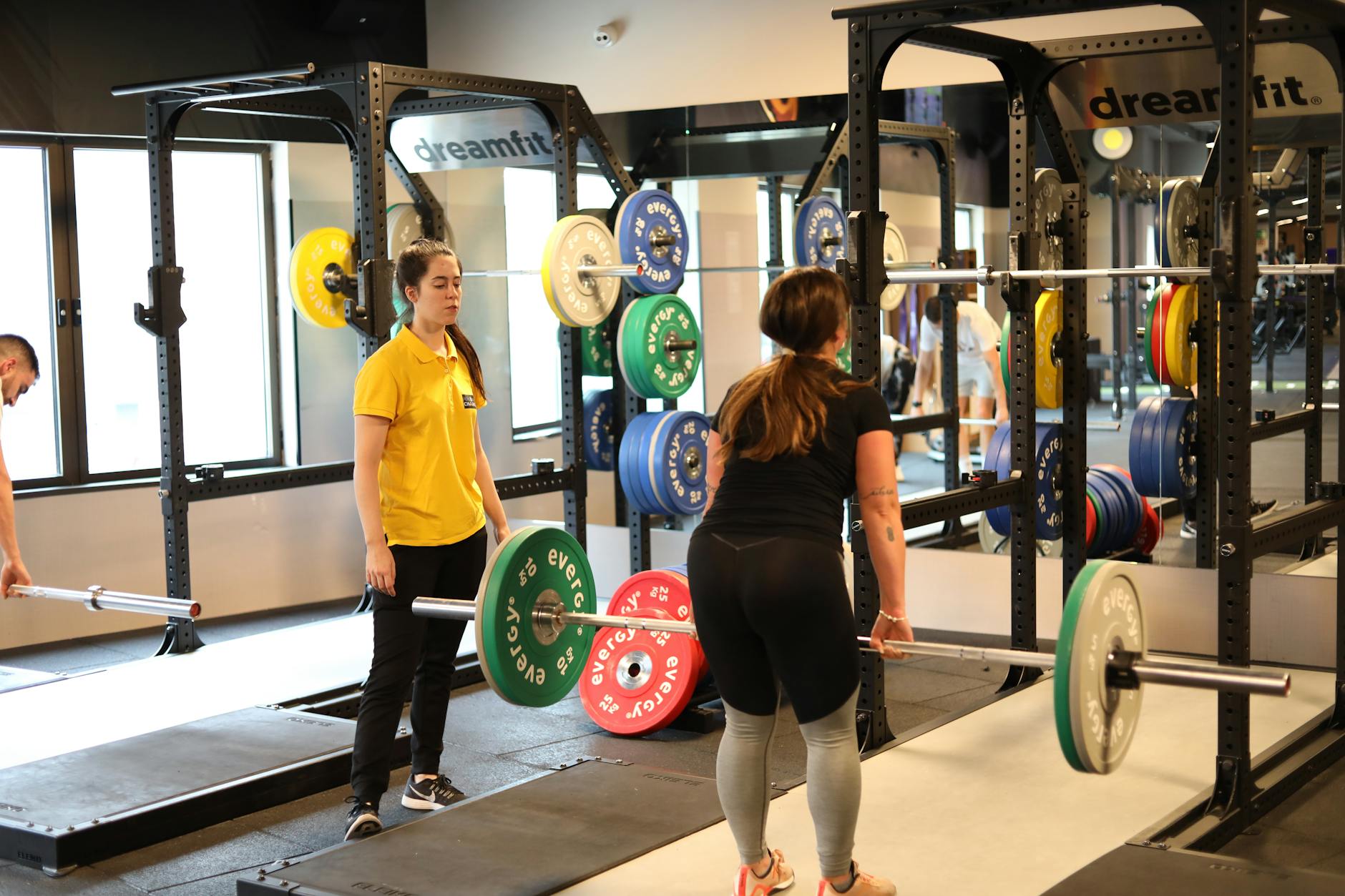
The muscle loss problem
With aggressive dieting, the body typically loses 25-30% muscle mass alongside fat. That drop in muscle lowers your resting metabolism, meaning you burn fewer calories even when you’re not moving. Someone who weighs 80 kilos and loses 10 kilos without strength training can see their daily calorie burn drop by 150-200 kcal – the equivalent of adding an extra hour of walking every day just to maintain the same weight.
How extreme dieting disrupts hormones
Long periods of calorie restriction can throw off leptin production, the hormone that helps regulate fullness, while also increasing cortisol, your main stress hormone. At District-S, members coming off crash diets often deal with stronger hunger signals and lower energy levels during the first 4-6 weeks of recovery.
Metabolic adaptation is real
The body adapts to prolonged calorie restriction by slowing down the metabolism. Research shows that this adaptation can last 6-12 months after a diet, even when normal eating resumes. Personal training helps counter this by pairing controlled fat loss with muscle-building work.
What you can do yourself:
- Measure your body fat percentage and muscle mass before starting a fat loss phase
- Keep your calorie deficit capped at 500 kcal per day
- Schedule at least 3 strength sessions per week
- Aim for 1.8-2.2 grams of protein per kilo of body weight
Why strength training is essential for effective fat loss
Strength training during a calorie deficit helps preserve muscle mass and increases total energy expenditure far more effectively than cardio alone. One entrepreneur in Eindhoven trained 4 times per week for 3 months under the guidance of District-S and lost 12 kilos of fat while gaining 2 kilos of muscle – a total body composition improvement of 14 kilos.
More muscle means a higher resting metabolism
A kilo of muscle burns roughly 15-25 kcal per day at rest, while a kilo of fat uses only 2-3 kcal. If you maintain or build muscle while losing fat, you create a higher long-term calorie burn. Train more effectively as an entrepreneur explains how systematic progression helps maximize that effect.
The afterburn effect of intense training
Strength training increases oxygen consumption for up to 24 hours after your workout, a phenomenon known as EPOC (Excess Post-Exercise Oxygen Consumption). District-S uses circuit training and supersets to maximize this effect, helping members burn an average of 50-100 extra calories in the hours after training.
Compound lifts vs isolation exercises
Compound exercises like squats, deadlifts, and bench presses recruit multiple muscle groups at once, which increases calorie burn both during and after training. In practice, personal trainers see clients burn 15-20% more calories per training hour when they focus on compound lifts instead of isolation work.
What you can do yourself:
- Build your training plan around compound lifts
- Train 3-4 times per week with a focus on progressive overload
- Use supersets or circuits to increase intensity
- Add 2 interval cardio sessions per week alongside strength training
| Training method | Calories burned per hour | Muscle retention | Afterburn effect | Time investment |
|---|---|---|---|---|
| Traditional cardio | 300-450 kcal | Low (muscle loss possible) | Minimal (2-4 hours) | High (5-7x/week) |
| Strength training only | 250-400 kcal | High (muscle gain possible) | Moderate (12-24 hours) | Moderate (3-4x/week) |
| Personal training mix | 400-600 kcal | Very high | High (24-48 hours) | Low (3x/week) |
| HIIT + strength | 450-650 kcal | High | Very high (24-48 hours) | Low (3-4x/week) |
How to optimize nutrition for maximum fat loss
Fat loss always starts with a calorie deficit, but your macronutrient split determines whether the weight you lose comes from fat or muscle. District-S uses a structured nutrition approach in which protein, carbs, and fats are strategically spread throughout the day to support fat loss for busy professionals in Eindhoven.
Protein intake and muscle retention
With the support of a personal trainer, clients are far more likely to maintain muscle mass by eating 1.8-2.2 grams of protein per kilo of body weight. For an 85-kilo man aiming to lose fat, that means around 150-185 grams of protein per day, split across 4-5 meals to support muscle protein synthesis and reduce muscle loss during a calorie deficit.
Smart carbohydrate timing
Eating carbs around your workouts helps improve both performance and recovery. Entrepreneur fitness only works when fat loss becomes part of your workweek explains how business professionals align their nutrition with their training schedule. Pre-workout carbs (30-50 grams) support energy, while post-workout carbs (40-80 grams) help restore glycogen stores.
Dietary fats and hormone support
A minimum fat intake of 0.8-1.2 grams per kilo of body weight helps support hormone production, especially testosterone and growth hormone, both of which are important for muscle retention and fat loss. Omega-3 fats from oily fish can also help reduce inflammation and improve recovery after hard training sessions.
What you can do yourself:
- Calculate your daily protein target: body weight × 2 grams
- Eat 70% of your carbs around your workouts
- Make sure at least 25% of your calories come from healthy fats
- Spread your protein across 4-5 meals during the day
Personal training vs working out alone for fat loss
Professionals in Eindhoven who try to lose fat on their own typically get 40-60% less out of the process than those working with a personal trainer. District-S regularly sees new members who trained solo for months but hit a plateau because of poor exercise technique, limited progression, and no accountability.
Better technique, better results, lower injury risk
Poor exercise form increases the risk of injury and makes each workout less effective. A personal trainer corrects technique in real time and fine-tunes movement patterns to maximize muscle activation. Clients who perform compound lifts properly recruit 20-30% more muscle mass than those using sloppy form, which directly increases calorie burn.
Progressive overload prevents plateaus
People training alone often increase intensity too slowly or repeat the same routine for too long. Personal trainers adjust weights, reps, tempo, and training structure each week to keep the body adapting. That matters, because once your body gets too comfortable, fat loss tends to slow down.
Accountability drives consistency
When sessions are booked with a trainer, people are far more likely to show up. Research shows that people working with a personal trainer complete 85-90% of their planned sessions, compared to just 40-50% for standard gym memberships.
What you can do yourself:
- Book an assessment with a certified personal trainer
- Ask for a structured 12-week program with a progression plan
- Block out training sessions in your calendar like business meetings
- Request monthly body fat and muscle mass measurements
The psychology behind sustainable fat loss
Fat loss is 70-80% mental. That is why District-S builds mindset coaching into the training process. Long-term physical change takes more than a training plan and a meal structure. For busy entrepreneurs especially, inconsistency often comes from work stress, decision fatigue, and an unpredictable schedule.
Habit-building and daily triggers
Successful fat loss becomes easier when you attach new habits to routines you already have. An entrepreneur who goes straight to the gym after their morning coffee creates a reliable trigger that takes far less willpower than trying to train whenever the day allows. How to build training discipline with a busy schedule offers practical strategies for professionals who want more consistency.
Managing stress and cortisol
Chronic work stress raises cortisol, which can increase belly fat storage and speed up muscle breakdown. Personal trainers at District-S teach clients stress-management techniques such as breathwork and progressive muscle relaxation to help lower cortisol and support better fat loss outcomes.
Setting realistic expectations
Unrealistic expectations often lead to frustration and drop-off. A realistic pace is 0.5-0.8 kilos of fat loss per week. For someone starting at 90 kilos, that translates to 6-10 kilos in 12 weeks. Personal trainers keep motivation high by setting realistic milestones and celebrating progress along the way.
What you can do yourself:
- Attach your workout to a fixed daily trigger such as coffee or your morning routine
- Practice 5 minutes of breathing exercises after stressful work moments
- Set weekly goals of 0.5 kilos of fat loss instead of vague monthly targets
- Reward yourself for process goals like training consistency, not just scale results
How to measure progress and adjust your plan
Effective fat loss requires objective tracking so you can monitor progress and make smart adjustments. District-S uses bioelectrical impedance measurements, circumference tracking, and performance testing to build a full picture of body composition. Body weight alone can be misleading because muscle gain can hide fat loss on the scale.
Bioelectrical impedance vs the scale
A scale tells you total body weight, but it cannot separate fat, muscle, and water. Bioelectrical impedance devices break that down into body fat percentage, muscle mass, and fluid balance. Clients who see no weight change after 2 weeks may still have lost 1% body fat while gaining muscle.
Circumference measurements show visual progress
Waist, hips, and arm measurements reveal where fat loss is happening and how your proportions are changing. Losing 2-3 centimeters from the waist each month is a strong sign of healthy abdominal fat loss, even if body weight stays the same because muscle mass is increasing. These measurements are especially motivating for women who prefer not to focus only on the scale.
Performance improvements matter too
Strength and fitness improvements strongly correlate with body composition changes. If your bench press goes from 60 to 80 kilos in 8 weeks, you have clearly built muscle, regardless of what the scale says. Personal trainers track these performance markers as part of the feedback process.
What you can do yourself:
- Measure your body fat percentage weekly using the same bioelectrical impedance device
- Record your waist, hips, and arm measurements monthly at the same time of day
- Keep a training log of your strength numbers for each exercise
- Take progress photos every 2 weeks in the same clothes and lighting
Frequently asked questions
How much fat can I realistically lose per week?
A healthy rate of fat loss is around 0.5-0.8 kilos per week when the program is set up properly. Losing weight faster than that increases the risk of muscle loss and a slower metabolism. Personal trainers typically aim for 6-10 kilos of fat loss in 12 weeks as a realistic and sustainable target.
How can District-S help me lose fat faster?
District-S combines personal training with nutrition coaching in premium private gyms in Eindhoven. Their trainers build personalized programs that combine strength training, interval training, and nutrition protocols to create the best possible fat loss results within 8-12 weeks.
Is cardio or strength training better for fat loss?
Strength training is the better foundation because it helps preserve muscle during a calorie deficit and supports a higher metabolism over time. Adding interval cardio 2 times per week on top of 3 strength sessions usually delivers better results than doing only cardio or only lifting.
What kind of nutrition supports fat loss best?
A high protein intake (1.8-2.2 grams per kilo of body weight) combined with strategic carbs around training and enough healthy fats to support hormone production. A daily calorie deficit of 300-500 kcal allows for controlled fat loss without pushing the body too hard.
How do I avoid regaining the weight after losing fat?
A gradual move back to maintenance calories while keeping your strength training routine in place is the best way to avoid rebound weight gain. Increase your calorie intake by 100-150 kcal per week until you reach maintenance, while continuing to train consistently to support your metabolism.
Conclusion
Fast, sustainable fat loss requires an integrated approach that combines strength training, smart nutrition, and mindset coaching. For busy professionals in Eindhoven, the combination of personal training, accountability, and personalized programming can produce measurable results within 8-12 weeks.
District-S offers this complete approach in its premium private gyms, where one-to-one coaching helps clients improve technique, make steady progress, and achieve lasting results. Their free trial session gives you a clear picture of the personal approach and what is possible for your specific goals. For more information about personal training programs in Eindhoven, get in touch for a no-obligation introduction and an assessment of your current fitness level and goals.
Would you like to learn how we can assist you with personal training?