
Quick summary
Workout nutrition plays a major role in whether your training actually delivers results. For busy professionals, it’s not just about what you eat, but when you eat it. According to the Voedingscentrum, active strength trainers are generally advised to consume 1.2 to 2 grams of protein per kilogram of body weight per day. The biggest driver of progress is not the exact timing of your shake, but your total daily intake.
- Aim for a full meal with complex carbs and protein 2 to 3 hours before training
- Spread your protein across several meals, ideally 20 to 40 grams per serving
- After training, try to eat a protein-rich meal within 2 hours
- Most recreational athletes don’t need supplements if their core nutrition is in place
- Sustainable progress comes from a tailored plan with a personal trainer, not a random one-off tip
Introduction
District-S sees the same pattern again and again in busy professionals: the workout is in the calendar, the motivation is there, but the nutrition around that session is left entirely to chance. A quick sandwich before heading out, something from a vending machine afterward, or nothing at all because the next meeting is already starting.
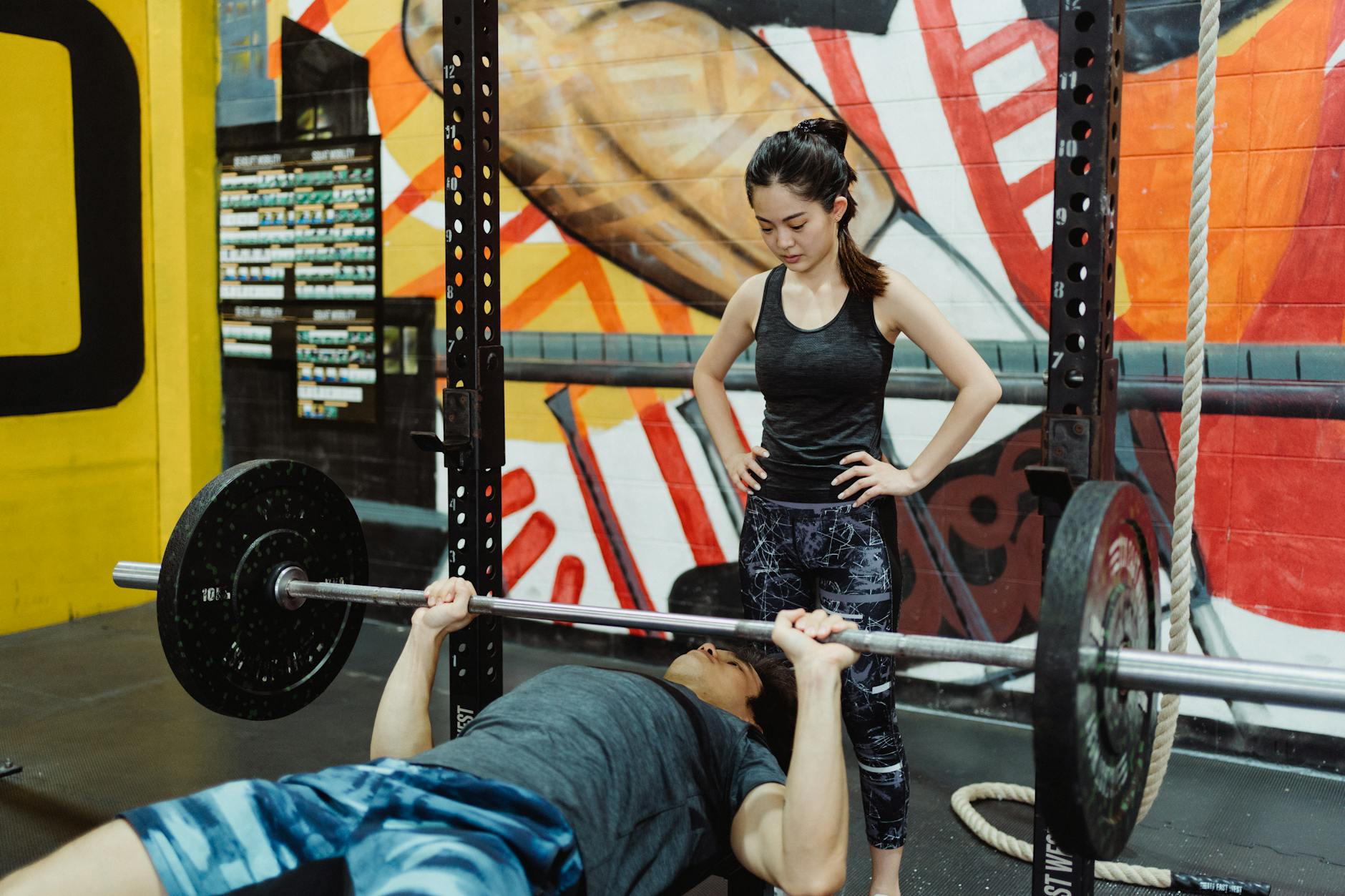
The issue usually isn’t the training itself. If you’re putting in an intense hour with a personal trainer, you’ve already built a strong foundation. But without the right fuel before and after the session, muscle recovery slows down, muscle gain is less efficient, and body composition progress starts to stall. For most District-S members, this is exactly where the real day-to-day difference is made: whether their nutrition supports their training or works against it.
The Gezondheidsraad advises adults to get at least 2.5 hours of moderate physical activity per week, plus muscle- and bone-strengthening exercise at least twice weekly. If you’re meeting that standard, your nutritional needs shift too. The problem is that most professionals who start training consistently don’t know exactly how to adjust their diet to match. This step-by-step guide gives a clear answer.
Why meal timing matters more than you think
Nutrient timing means matching your meals to your training sessions. For people with unpredictable schedules, this is often the first thing to fall apart: workouts move around during the week, lunch meetings disrupt your routine, and evening sessions finish just before bed.
The anabolic window myth
Years ago, the advice was simple: drink a protein shake within 45 minutes of training or you’ll miss your chance to build muscle. That idea no longer holds up. Current research shows that total daily protein intake is by far the most important factor for muscle growth and recovery. As Voedingscentrum research confirms: “An intake of around 20-40 grams of protein per eating occasion, spread evenly across multiple meals during the day, has a positive effect on muscle growth and recovery.”
That’s good news if your schedule is packed: you do not need to sit at your desk with a shaker bottle at the ready. What does matter is getting enough protein across the day and dividing it over multiple meals.
What timing still does matter for
Just because timing is less critical than people once thought doesn’t mean it’s irrelevant. Your muscles remain more responsive to protein for roughly 24 hours after training. If you place your workout between two protein-rich meals, usually no more than 4 to 6 hours apart, you’ll consistently get more out of each session. For a professional training at 7:00 a.m. and not eating lunch until 1:00 p.m., a small protein-rich snack right after training is a smart move, not a hard rule.
Why carbs matter before training
Carbohydrates are your main fuel source during high-intensity exercise. If you don’t eat enough carbs before a strength workout, you’ll usually notice it in reduced performance and less productive training volume. A proper meal with complex carbs, such as oats, whole grain bread, or rice, usually eaten 2 to 3 hours before training, helps keep your energy stable throughout the session.
Take action:
- Check whether your workout always falls within 5 to 6 hours of a protein-rich meal
- If you regularly go more than 4 hours without eating before training, add a small snack: Greek yogurt, an egg, or a handful of nuts
- Don’t skip the post-workout meal; aim to eat within 2 hours of finishing
- If you often hit an energy dip halfway through training, your pre-workout meal may be too low in carbs
How much protein do you actually need as an active professional?
Protein needs for training depend on how often you train, your body weight, and your goal. The standard recommendation for recreational and active strength trainers is between 1.2 and 2 grams per kilogram of body weight per day. That can sound abstract, so here’s what it looks like in practice.
A practical calculation by profile
Take someone who weighs 80 kilograms and does personal training twice a week, with goals focused on strength and better body composition. According to the Voedingscentrum, the usual recommendation is 1.2 to 2 grams per kilogram of body weight per day. For this person, that works out to roughly 96 to 160 grams of protein daily. That’s substantially higher than the baseline guideline of 0.8 grams for inactive adults.
For people training intensely more than twice per week, the Consumentenbond advises 1.5 to 2 grams per kilogram of body weight per day, which may support faster recovery and muscle growth. At the same time, the Consumentenbond emphasizes that regular food is usually enough to cover this for recreational athletes.
Time-saving protein sources that actually work
Not every busy professional has time to cook fresh chicken and rice after an evening session. Practical protein sources that need very little prep include:
- Greek yogurt or quark-style dairy (250 grams usually provides around 20 grams of protein)
- Cottage cheese
- Eggs, boiled the night before
- Whole grain bread with chicken breast or tuna
- A protein shake as a supplement, not a replacement for a real meal
That last point matters. If your basic nutrition is solid, most people don’t need supplements for general training goals. RIVM research shows that more than a quarter of Dutch athletes use sports supplements, most commonly protein, caffeine, and creatine. At the same time, around one in ten products used may contain potentially harmful substances, which makes careful selection essential.
Protein distribution across the day
One huge protein-heavy dinner in the evening is a common mistake. Per meal, the body generally makes effective use of around 20 to 40 grams of protein for muscle building. So if your daily target is 140 grams, you’ll do better spreading that over four or five meals rather than trying to cram it into two. For professionals who skip breakfast or have a light lunch, too much of their protein intake gets pushed into the evening, which is less than ideal.
Take action:
- Calculate your target: body weight (kg) x 1.4 to 1.8 grams = your daily protein goal as an active athlete
- Divide that across at least 4 eating moments of 20 to 40 grams each
- Check whether breakfast and lunch together already cover half of your goal; if not, add a snack
- Use a food diary for one week with an app like Cronometer or MyFitnessPal to get clarity before making changes
Step by step: how to structure your nutrition around your training schedule
A practical nutrition plan doesn’t have to be complicated. Below is the framework District-S uses when building tailored nutrition plans for professionals doing personal training one to two times per week.
Step 1: Lock your training times into your week
Nutrition only works well around training if your training happens at consistent times. If you train three times a week at different hours every time, it becomes much harder to plan food properly. District-S recommends one or two fixed weekly time slots. Only then should you build your eating plan around them, not the other way around. Also read how to build workout discipline as a busy professional in a way that actually lasts.
Step 2: Plan your pre-workout meal
Ideally, eat a full meal with complex carbs and moderate protein 2 to 3 hours before training. If you train early in the morning, a lighter option, such as a banana with yogurt or a small portion of oats, is better than training completely fasted. Large meals right before a workout force the body to focus on digestion and can hurt performance.
Step 3: Get protein in within 2 hours after training
After training, your body needs protein for muscle repair. Aim for a meal or snack with 20 to 40 grams of protein within two hours of finishing. If you have to jump straight into a meeting afterward, prepare in advance: a container of Greek yogurt in your bag or a whole grain wrap ready in the fridge.
Step 4: Stay on top of hydration
During an hour of strength training, most people lose around 0.5 to 1 liter of fluid, depending on intensity and room temperature. Drink enough water before, during, and after training. For intense sessions longer than an hour, an electrolyte drink can be useful, but for the average professional doing a one-hour personal training session, water is usually enough.
Step 5: Don’t rely on dinner as your only real protein hit
A lot of professionals eat too little protein during the day and try to make up for it with a large evening meal. That’s not ideal for muscle growth. Recovery days matter just as much as training days: if you under-eat protein the day after a session, recovery slows down significantly. If recovery feels sluggish, also read the article on stress, sleep, and sports performance.
Step 6: Use meal prep as a time-saving investment
When you prep your meals before training days, you remove stress and make better choices easier. Meal prep for entrepreneurs doesn’t need to take more than an hour a week: a batch of boiled eggs, chopped vegetables, and cooked rice goes a long way. It also sharply reduces the chance of impulse food purchases after a hard workout.
Step 7: Have a professional review your plan
General guidelines are a starting point, not the finish line. If you want consistent results, it helps to have a nutrition plan matched to your training volume, your goal, and the demands of your day. District-S builds nutrition advice into its one-to-one coaching, so members in Eindhoven don’t have to figure it all out themselves. You can read more about the approach on the page about lifestyle and training packages at District-S.
Take action:
- Track what you eat for one week on training days and rest days
- Compare your protein intake: do you hit your target on both?
- Create a training nutrition routine: what do you always eat 2 hours before and 1 hour after training?
- Review that routine with your personal trainer and adjust it every four weeks based on results
Comparison table: nutrition with and without guidance
| Aspect | Without guidance | With a tailored plan (District-S approach) |
|---|---|---|
| Daily protein target | Unknown or estimated | Calculated based on body weight and training goal (1.4-1.8 g/kg) |
| Meal timing | Ad hoc, depends on the day | Fixed routine: meal 2-3 hours before, snack within 2 hours after training |
| Number of eating moments | Usually 2-3 per day | Usually 4-5 per day, spread out properly |
| Supplement use | Often unnecessary or uninformed | Only when indicated, after checking core nutrition |
| Adjustment frequency | Rarely or never | Reviewed every 4 weeks based on results |
| Time spent planning | High (you figure it out yourself) | Low (trainer provides the plan) |
Common mistakes that cost you results
The biggest nutrition mistake active professionals make is usually not eating the wrong foods. It’s consistently not eating enough at the right times. At District-S, three patterns come up most often.
Training on an almost empty stomach
A busy morning often means professionals head to training without eating properly. While muscle glycogen stores are usually sufficient for a shorter session, an hour of strength training doesn’t require massive carb reserves, people who train early with no breakfast at all usually underperform. In that case, a light, easy-to-digest snack is better than nothing: a bowl of yogurt with some fruit is a simple example.
Saving all your protein for the evening
If your day is full of meetings, travel, and skipped meals, your protein intake often ends up heavily back-loaded into dinner. A large plate of chicken and rice at 8:00 p.m. doesn’t fully solve that problem. The body can only make effective use of a limited amount of protein per meal. The rest is used for energy or processed otherwise. Spreading your intake out is the better solution, and that takes conscious planning.
Using supplements instead of fixing the basics
According to RIVM data, around a quarter to a third of Dutch athletes use sports supplements, especially in strength training and fitness. Supplements can be useful as an add-on to a solid diet, but not as a substitute for it. If you’re drinking protein shakes while consistently sleeping too little, dealing with too much stress, and eating irregularly, you’re not addressing the real issue.
Take action:
- Review three training days: did you eat before and after each session? If not, what got in the way?
- Check whether your daily protein intake is spread across the day or concentrated at dinner
- Only consider supplements after your basic nutrition has been consistent for at least two weeks
- Discuss your eating pattern with your personal trainer; they often spot patterns you miss yourself
Frequently asked questions
What should I eat before strength training if I’m short on time?
Pre-workout nutrition for an intense strength session ideally combines complex carbs and protein, usually 2 to 3 hours before training. If you have less than an hour, go for something small and easy to digest: a banana with yogurt or a slice of whole grain toast with peanut butter. Large meals right before training can drag down performance because your body is trying to digest and exercise at the same time.
How much protein do I need per day if I train twice a week?
Protein needs when training twice a week usually land around 1.4 to 1.7 grams per kilogram of body weight per day for most people in practice. For someone weighing 75 kilograms, that comes to roughly 105 to 130 grams daily. For the best effect on muscle recovery and growth, spread this over four to five eating moments with 20 to 40 grams per serving. For most people, regular food already covers most or all of this without supplements.
Does it matter whether I eat protein before or after training?
Protein distribution across the day matters more for most people than the exact timing around a workout. Total daily protein intake drives most of the result, not whether you had your shake before or after training. That said, it is smart in practice to place your workout between two protein-rich meals, ideally with no more than 5 to 6 hours between them. That way, you make better use of the muscles’ increased sensitivity in the hours after training.
How does District-S help with nutrition alongside training?
District-S builds nutrition coaching into its one-to-one support as part of the full journey. Every personal trainer works with the member to create a nutrition plan that fits training volume, goals, and the demands of everyday life. That plan is reviewed and adjusted regularly based on measurable outcomes, such as body composition changes and energy levels. For clients in Eindhoven, this tailored support is available at the Strijp-S and city center locations.
Do I need sports supplements if I do personal training?
Sports supplements are not necessary for most recreational athletes and professionals training once or twice a week if their core nutrition is already in order. The Consumentenbond states that regular food usually already covers protein needs for recreational athletes. A protein shake can be useful as a practical backup if a полноценной meal after training isn’t realistic, but it should never replace a balanced eating pattern. Always discuss supplements with your personal trainer before spending money on them.
Conclusion
Nutrition around training is not a side issue for busy professionals. It’s one of the biggest factors in whether a well-designed training plan actually works. The theory is simple: eat enough protein across the day, include complex carbs before training, and make sure you have a protein-rich meal afterward. The hard part is real life, because calendars are full and solid habits take time to build.
District-S works from the principle that nutrition and training should never be treated separately. Every program at the private gym in Eindhoven combines one-to-one personal training with tailored nutrition plans that fit the client’s daily rhythm. No generic template, but a plan that is reviewed every four weeks and adjusted based on measurable progress.
If you want to see what that looks like in practice, you can request a free trial session at district-s.nl.
Would you like to learn how we can assist you with personal training?
Sources
- Voedingscentrum
- Voedingscentrum-onderzoek — Issuu
- Consumentenbond
- Uit RIVM-onderzoek — Rivm
- Heb je extra eiwit (proteïne) nodig als je sport? — Voedingscentrum
- Sport en voeding Factsheet — Voedingscentrum (via Issuu)
- Ruim een kwart amateursporters gebruikt sportsupplementen — RIVM
- Het gebruik van workout-supplementen door sporters in Nederland — RIVM