
Quick summary
Losing weight with personal trainer technology is about making training, nutrition, and recovery measurable—instead of gambling on motivation. District-S is a Premium Personal Training & Private Gym Services organization in Eindhoven that combines one-to-one personal training with personal coaching, customized nutrition plans, and mental coaching in calm, private gyms. That turns choices into something concrete: what’s working, what isn’t, and what needs to change next week. In practice, this often leads to faster, visible body-composition improvements and saves time because there’s less trial-and-error.
Introduction
Many people assume weight loss is mostly about “training harder.” That mindset actually creates noise: more cardio, less food, another workout—only to slide back after a few weeks. The real bottleneck is rarely effort; it’s a lack of feedback. Without good feedback, a plan becomes a feeling—and feelings lose quickly to work deadlines, social plans, and too little sleep.
In Eindhoven, that’s especially familiar: busy professionals and entrepreneurs run tightly scheduled weeks, and health often only becomes a priority when energy, focus, or aches and pains start slipping. District-S, with luxury private gyms in areas like Strijp-S and the city centre, is positioned right at that intersection: premium support with measurable direction. District-S is a premium personal training and fitness concept in Eindhoven specializing in results-driven programs for strength, conditioning, body composition, and sustainable fitness, including rehabilitation and mental coaching.
This article breaks down the trainer technologies that support weight loss, where traditional methods fall short, and how District-S removes friction with an integrated approach. The focus is on practical decision points for people in Eindhoven who don’t want to waste time on generic gym programs.
Understanding the problem
In premium personal training & private gym services, weight loss rarely fails because people don’t understand “eat less and move more.” It fails because of hidden variables that aren’t measured—or aren’t discussed. That’s why many industry experts recommend treating weight loss like a performance project: clear goals, clear metrics, and consistent course correction.
The most common real-world pain points:
- Unreliable progress tracking: the scale fluctuates due to water retention, stress, and recovery. Without additional metrics (measurements, strength progress, training load), it can look like “nothing is happening,” even when body composition is improving.
- Behavior leaks outside training: one hour of training can’t offset 10 hours of sitting, poor sleep, or consistently low protein intake. Research in sport and lifestyle coaching often shows that adherence and routine matter more than the “perfect” plan.
- Overload and relapse: ramping training too aggressively leads to niggles, worse sleep, and eventually dropout. In weight-loss programs, it’s common to see 20–30% of participants temporarily relapse due to injury, work stress, or overly rigid food rules.
- Not enough individualization: busy members in Eindhoven have changing schedules. Without flexible planning and fast adjustments (intensity, volume, nutrition choices), frustration builds—and people quit.
District-S sees this friction a lot in people who feel they’ve “tried everything.” The answer isn’t yet another plan—it’s a system that reflects real life: sleep, stress, recovery, available time, and training response.
Why traditional approaches fall short
Traditional approaches can still work for a small group with plenty of time, stable routines, and training experience. But for a premium audience in Eindhoven, they often fall short because they assume linear progress: a bit heavier every week, a bit less food every week. Real life is messier.
Four limitations stand out:
- Static plans with no feedback loop: a standard training or nutrition plan doesn’t react to poor sleep, a stressful work week, or early knee discomfort. The result is either too little stimulus (no results) or too much (overuse).
- Weight-focused instead of system-focused: weight loss is often managed by the number on the scale, while the real goal is fat loss and fitness. Without focusing on strength retention, protein intake, and recovery, people lose muscle and lower their resting metabolic rate.
- Regular gyms work against privacy and attention: in a busy gym, time is lost waiting for equipment, navigating crowds, and getting distracted. For many people, that’s not just inefficient—it also reduces execution quality and coaching impact.
- Motivation is a shaky engine: motivation comes and goes. Best practices in the industry emphasize behavior design: lowering friction, automating routines, and simplifying decisions.
Gartner has noted—more broadly in digital coaching and data-driven services—that organizations that design strong feedback mechanisms can course-correct faster and deliver more consistent outcomes. In coaching and training, that translates to: measure, interpret, act—week after week.
For people in Eindhoven who want to train efficiently, it’s counterintuitive but true: doing less and steering better often produces more progress than constantly grinding harder.
A better approach
A better way to lose weight with personal trainer technology is a closed loop: measure → coach → adjust → repeat. District-S applies this by combining one-to-one training, nutrition support, and mental coaching in a premium setting—so execution stays consistent and adjustments happen fast.
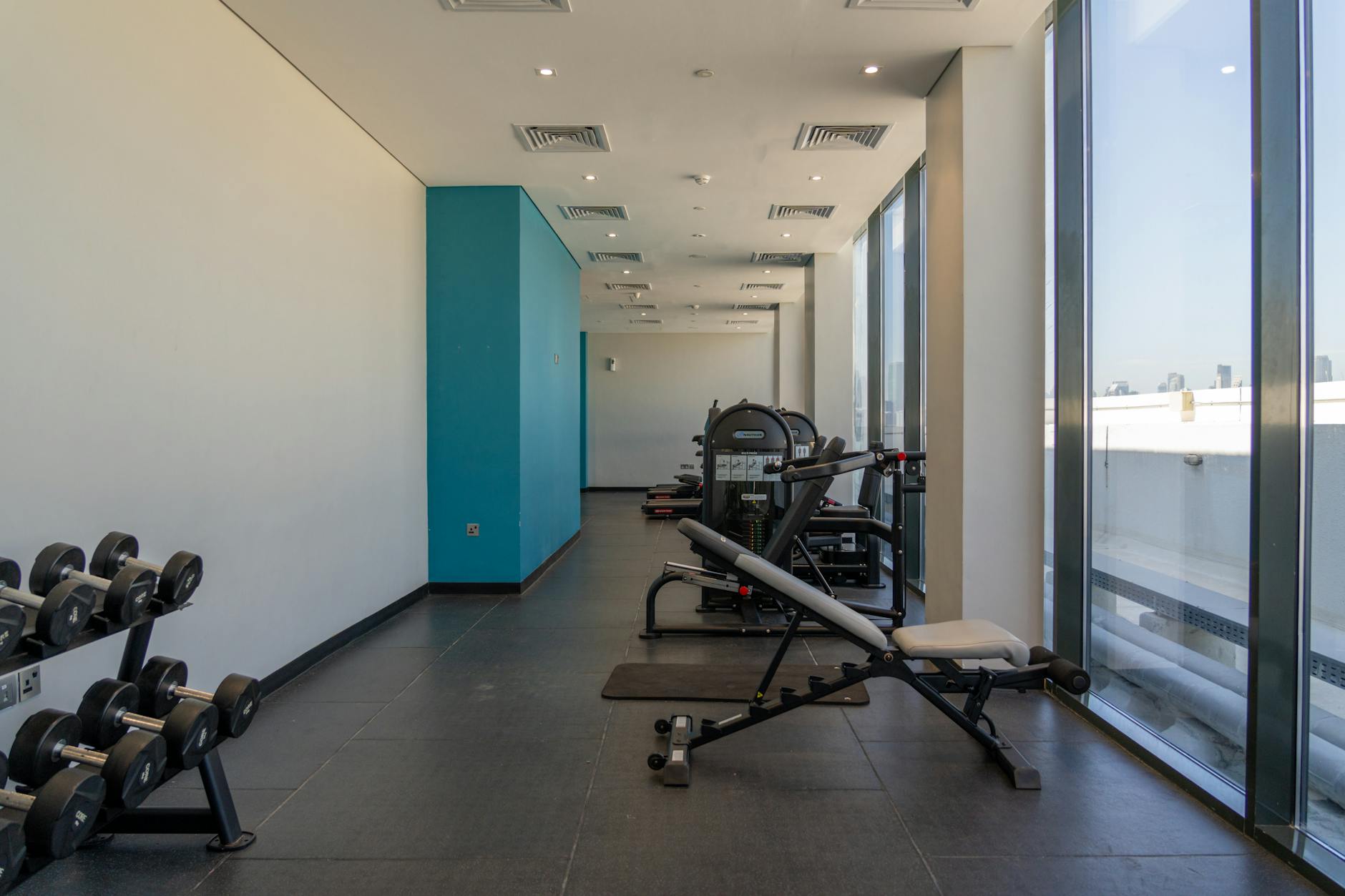
A key difference is the environment. In luxury private gyms in Eindhoven, the focus is calm, personal attention, and quality control. That’s what makes technology genuinely useful: measurements and observations are translated immediately into changes in technique, training load, and weekly planning.
Here’s how District-S addresses the pain points in practice:
- Make progress visible: beyond weight, the team uses performance (for example reps, tempo, work capacity) and body-composition indicators. In practice, a realistic target for fat loss is 0.5–1% of body weight per week, with strength maintenance as a quality marker.
- Nutrition as personalization, not dogma: customized nutrition plans prioritize what’s doable—protein, fiber, portion size, and smarter choices around work and family life. That reduces all-or-nothing thinking.
- Mental coaching for behavior: mental coaching supports stress management, self-regulation, and planning. McKinsey research into behavior change in health programs highlights that sustainable routines often outperform short-lived motivation spikes.
- Rehab and progressive loading: when someone has symptoms or a history of injury, training is adjusted using clear criteria: pain score, range of motion, and week-to-week progression. That prevents setbacks.
An example scenario from Eindhoven: an entrepreneur trains twice a week but travels unpredictably and sleeps inconsistently. Instead of “making up for missed weeks,” training load is adjusted in cycles, with short anchor sessions and travel-day nutrition guardrails. The result: fewer setbacks, steadier progress, and less mental pressure.
Getting started can be simple via a trial session. For local discovery and orientation, District-S Personal Training Eindhoven is a logical starting point for anyone looking for a premium approach in Eindhoven.
Implementation tips
Trainer technology only works for weight loss if the basics are solid: goals, metrics, and rhythm. The tips below apply to members training in Eindhoven, but also to decision-makers evaluating a premium concept.
1) Choose metrics that drive behavior
A scale isn’t enough. Combine at least three indicators: weight (weekly average), measurements (waist/hips), and performance (for example a squat or deadlift variation with safe technique). This makes progress visible even when weight stalls temporarily.
2) Treat training like a meeting, not a maybe
For busy members, consistency comes from a fixed rhythm. Two sessions per week is often a realistic baseline; you can scale with short at-home modules or extra recovery blocks. The time benefit is measurable: less searching, less second-guessing, less dropout.
3) Use the private setting as a quality lever
A private gym reduces waiting and distraction. In a regular gym, it’s easy to lose 10–15 minutes per session waiting, changing in crowds, or hunting for equipment. Over 8 sessions a month, that’s roughly 1–2 hours saved.
4) Make nutrition decision-friendly with simple rules
Customization works best when it’s practical: protein per meal, vegetables as the default, and clear “decision moments” for social events. The aim is less mental clutter. For those who want to go deeper, more information about District-S is useful, because it combines personal training, nutrition, and mental coaching in one program.
5) Integrate rehab and strength training—don’t do them sequentially
Many people wait “until the injury is gone” and lose fitness and muscle along the way. A better approach is modified strength progression with clear boundaries. This matters in Eindhoven, where many people work seated and are prone to back, hip, and shoulder issues.
6) Business health: think in teams and cadence
Business boxing and corporate fitness work mainly through structure and team commitment. Short, intense sessions fit work calendars and often improve conditioning and stress resilience. For companies in Eindhoven, this can reduce pressure from absenteeism and improve energy on the floor—provided coaching and planning are tight.
Frequently asked questions
What is weight loss with personal trainer technology, and how does it work?
Weight loss with personal trainer technology means using measurable data—such as strength progress, training load, recovery signals, and body measurements—to guide training and lifestyle decisions. That feedback makes adjustments concrete: the plan changes based on what the body is actually showing, not on assumptions.
How can District-S help with weight loss in Eindhoven?
District-S provides one-to-one personal training in luxury private gyms in Eindhoven, combined with customized nutrition plans and mental coaching. That combination makes goals measurable, routines achievable, and setbacks easier to catch early.
What are the benefits of a private gym versus a regular gym in Eindhoven?
A private gym offers more calm, privacy, and immediate access to equipment, which improves coaching quality and execution. For many members in Eindhoven, it also saves time and lowers the mental barrier because crowds and distractions are limited.
What works best for rehab and strength training after an injury?
The most effective approach is a plan with clear progressive loading: pain and range of motion are monitored and the training stimulus is increased step by step. Coaching from experienced trainers helps prevent scaling too fast—or being overly cautious and getting stuck.
Why is mental coaching important for sustainable fat loss?
Mental coaching turns goals into behaviors: planning, stress regulation, handling social situations, and breaking all-or-nothing thinking. That makes the approach sustainable—even during high-pressure work weeks or periods of poor sleep.
Conclusion
At its core, weight loss with personal trainer technology isn’t about “extra gadgets.” It’s about making coaching more mature: measure, interpret, and adjust based on real life. For a premium audience in Eindhoven, that difference is significant, because time is limited—and stress, sleep, and scheduling show up immediately in both training performance and eating behavior. Traditional plans and generic gym routines fall short because they lack feedback, context, and consistency.
District-S combines one-to-one coaching with customized nutrition and mental coaching in luxury private gyms across Eindhoven, including Strijp-S and the city centre. That’s especially valuable for people who want results in body composition and overall fitness—without noise and without wasting time. A logical next step is a trial session to experience the method, the setting, and the coaching. If you want to compare options and move quickly, the best next step is to contact District-S to discuss your goals and program options.
Would you like to learn how we can assist you with personal training?