
Direct answer
A strong core comes from exercises that train anti-movement, such as planks, dead bugs, carries, and anti-rotation work, combined with arm and leg movement, not from endless sit-ups. District-S often sees busy professionals skip exactly these exercises because they look boring, do not leave you sore, and do not promise visible abs right away. That is where the real misunderstanding starts.
- Your core mainly works as a force transfer system between your legs, torso, and arms, not as a standalone ab muscle.
- Sit-ups fatigue the abs quickly and place unnecessary stress on the lower back.
- Anti-rotation and stability exercises have been shown to reduce the risk of injuries, including leg injuries.
- Two short sessions per week are enough to make a noticeable difference, as long as your technique is solid.
- According to Dutch data, lower back pain affects nearly half of the working population, and core training is one of the few evidence-based things you can actively do about it.
Introduction
You finish your strength workout with three sets of crunches, feel your abs burning, and think, core done. Two months later, nothing has really changed, except for that nagging lower back ache after a long day at your desk. District-S sees this pattern all the time in entrepreneurs and professionals who train with purpose but do not have hours to waste.
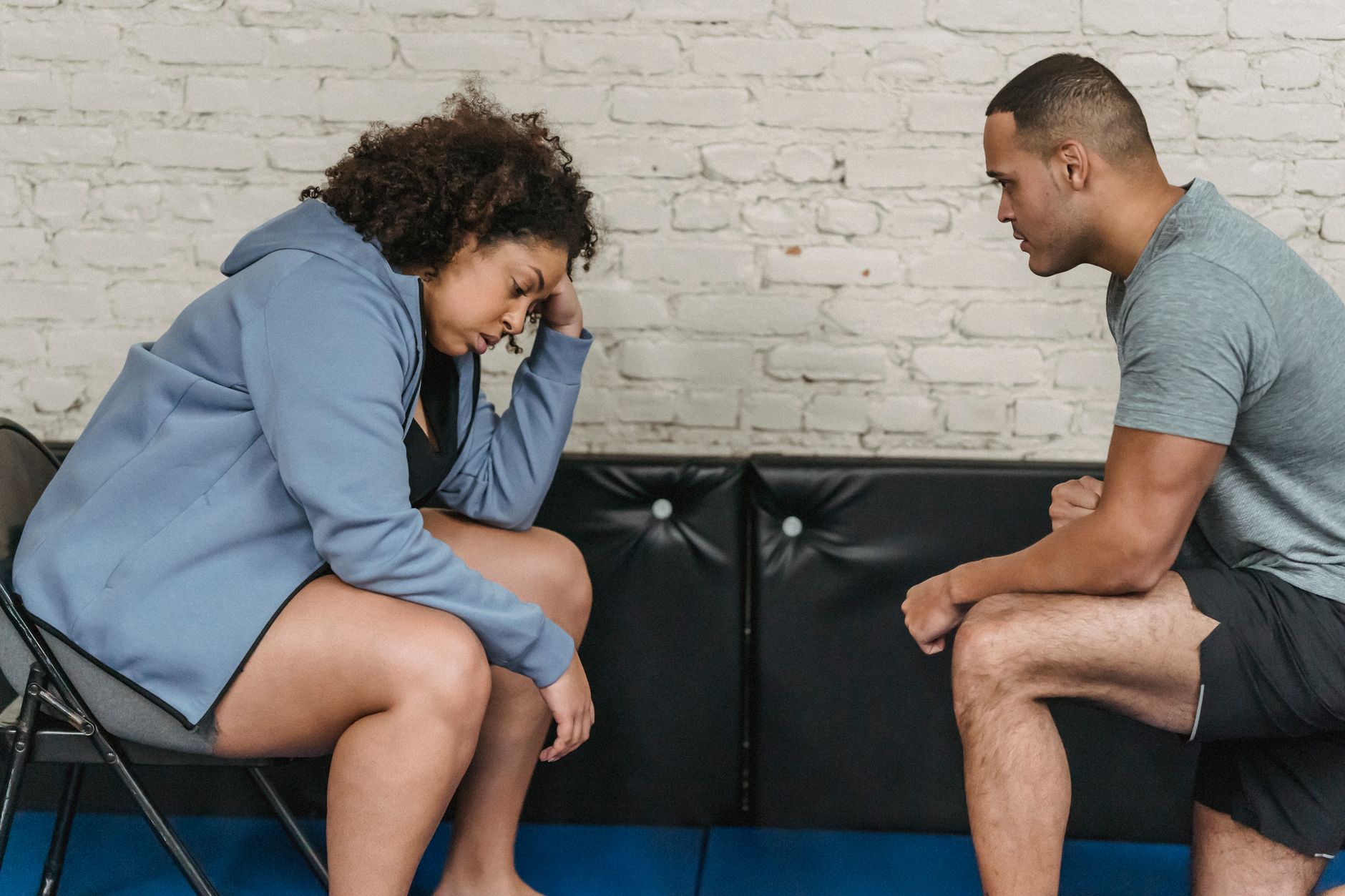
Most people treat their core like an aesthetic project. They want abs they can see. But from a functional point of view, your core is the link that transfers force from your legs to your upper body and back again. If you train that system the wrong way, you not only miss out on visible abs, you also miss the injury protection that matters far more.
Lower back pain is not a niche issue in the Netherlands. According to the multidisciplinary guideline on Richtlijnendatabase.nl, 49 to 70% of the population experiences it at some point, and the one-year prevalence among workers is around 44% for men and 48% for women. A well-trained core is one of the few things you can directly influence yourself. In this article, you will see which exercises actually work, and why most people keep skipping them.
Why a strong core is about more than abs
Your core primarily functions as a bridge that transfers force between your lower and upper body, not as a mirror muscle group. That distinction determines whether your training is useful or just familiar.
Your core is a force bridge, not a show muscle
Scientific research, summarized on FysiOefeningen.nl, shows that the core matters most when it transfers force from the ground upward and back down again. Think of a business owner picking up a heavy bag in one smooth motion, or a tennis player hitting a serve. The force moves through the torso. If that link is weak, force leaks away and the load gets pushed into vulnerable areas, usually the lower back.
That is why people can have visible abs and still deal with back pain. Looking trained is not the same as being able to stabilize your torso under load.
Why this matters for your health
The scale of the problem is significant. According to Volksgezondheidenzorg.info (RIVM), there were 549.200 new cases of acute back pain seen by Dutch GPs in 2024, making it the most common diagnosis category within neck and back complaints. For a professional with a full schedule, back pain means immediate consequences: fewer productive hours, worse sleep, and missed training sessions.
A systematic review from 2021 in the MDPI Journal of Functional Morphology and Kinesiology, available via PubMed Central, concluded that core stability exercises reduce pain intensity and functional limitations in people with chronic lower back pain, while also improving quality of life. That is not a sales pitch. It is an evidence-based outcome.
The difference between strength and stability
At District-S, one common pattern stands out: clients often confuse strength with stability. Strength is how much you can lift. Stability is whether your torso stays controlled and neutral while force pulls against it. Good core training focuses mainly on the second one, because that is what protects you when you lift, twist, and play sports.
Checklist:
- Ask yourself: does my lower back stay neutral when I lift a heavy bag? If not, prioritize anti-extension work like planks and dead bugs.
- Test whether you can rotate without your hips tipping with you. If not, add anti-rotation work like the Pallof press.
- Do you get back pain after desk work more than two weeks per month? Then treat core training as a priority, not an afterthought.
Which core exercises actually work? Step by step
The most effective core exercises train anti-movement. Your torso stays solid while your arms and legs move. Below is the progression District-S uses in tailored coaching programs.
Step 1: Start with anti-extension, such as the plank and dead bug
Start with exercises that stop your lower back from collapsing into extension. The plank and dead bug teach you to keep your torso neutral under tension. Progress by adding time and reps, not by chasing soreness. District-S uses these as a starting benchmark because they immediately show whether someone can brace properly without overextending the spine.
Step 2: Add anti-rotation, such as the Pallof press
The Pallof press, where you resist rotation using a cable or resistance band, trains exactly the kind of stability that protects you during twisting movement. Research discussed on FysiOefeningen.nl points out that static ab exercises like sit-ups fatigue the muscles quickly, while the tendon structure is not well suited to that kind of repeated loading. Anti-rotation work is a better match for how your core functions in real life.
Step 3: Train with moving limbs
Research summarized on FIT.nl shows that it is not enough to do only static exercises. Movements where the arms and legs are involved also help train proprioception and neuromuscular control. Think of bird dogs or dead bugs with arm reach. That is the kind of coordination that actually carries over.
Step 4: Add loaded carries, such as the farmer’s carry and suitcase carry
Walking with weight, especially on one side only with a suitcase carry, forces your torso to resist asymmetrical loading. It is one of the most practical exercises you can do because it closely matches daily life, like carrying a bag or suitcase. For busy professionals, it is also efficient because it trains your core, grip, and posture at the same time.
Step 5: Build core work into compound lifts
A well-executed squat or deadlift is also core training. District-S ties core stability into big compound movements so your torso learns to hold up under real load, not just in isolation on a mat. That is where the District-S approach in Eindhoven stands apart from basic ab circuits.
Step 6: Get your technique checked
Most mistakes are not about exercise choice. They are about execution. A sagging lower back during a plank does more harm than good. In a private gym with one-on-one coaching, every rep can be corrected in real time, which is something self-guided training often misses.
Checklist:
- Keep plank variations under 60 seconds with perfect form. If you can go longer without losing position, make the exercise harder instead of simply holding longer.
- Do anti-rotation work for 2 sets per side, and stop as soon as your hip starts turning with the movement.
- Progress carries by distance or weight, not just time. 30 to 40 meters per set is usually enough.
Why does almost everyone skip these exercises?
People skip effective core exercises because they do not cause much soreness, they feel slow, and they do not promise a visible payoff right away. That is mostly a psychology problem, not a knowledge problem.
Soreness is a poor way to judge effectiveness
A lot of people judge a workout by how much it burns. A dead bug barely gives that feeling, so it can seem like wasted time. But a burning sensation is not proof of results. Take an account manager at a mid-sized company who spent years doing crunches in front of the mirror. The abs felt worked, but the back pain after long days only improved once the focus shifted to stability work and carries.
You do not see the results right away
Core stability does not show up clearly in the mirror. You notice it when you pick up something heavy without thinking twice. For people who train mainly for appearance, that can feel unrewarding. District-S frames it differently: the real win is fewer back complaints, better performance in strength training and sport, and stronger posture during long workdays.
Most adults are already missing the basics
For many people, the foundation is not there to begin with. According to the Dutch physical activity guidelines from the Health Council (2017), adults should do muscle and bone strengthening activities at least twice per week. Yet according to the Gezondheidsmonitor 2024 on Sportenbewegenincijfers.nl, only 48,9% of adults meet the movement guidelines. If someone already struggles to train twice a week, it makes sense that they prioritize visible muscles first and skip the less exciting basics.
| Approach | Time per session | Injury protection | Visible effect | Long-term consistency |
|---|---|---|---|---|
| Sit-ups and crunches only | 10 min | Low | Limited | High, but not very useful |
| Anti-movement plus carries | 10 to 15 min | High | Indirect | متوسط |
| Coached core work inside compound exercises | Integrated | High | Functional | High with coaching |
Checklist:
- Judge your core training by function, not soreness. Ask yourself once a month whether lifting heavy things feels easier.
- Put core work at the start of your session as a priority, not at the end when you are already tired.
- Training less than twice a week? Fix that first, because core work without basic consistency will not get you far. You can also read why working out once a week still counts, but has limits.
How do you fit core training into a busy week?
Effective core training does not need its own full workout. For most people, ten minutes of focused work twice per week, built into existing sessions, is enough. The real bottleneck is consistency, not time.
Use short, focused blocks
Take an entrepreneur who trains three times per week while juggling a packed calendar. Instead of creating a separate core day, District-S adds two or three stability exercises across those sessions. That way the core gets trained every week without adding extra gym time. The flexible model with rotating schedules makes that realistic alongside work and family life.
Nutrition and recovery matter too
Your core muscles recover like any other muscle group. Adequate protein and recovery are part of the process. If you train but do not eat enough, progress will be slower than it needs to be. You can read more in this guide on protein for muscle growth, and this article on what to eat around your workout when your schedule is packed. Training and lifestyle always work together.
Coaching prevents the quiet mistakes
The biggest risk of training alone is that nobody corrects you. In the luxury private gyms from District-S in Strijp-S and the city center, members train one on one, so technical errors are corrected before they turn into pain. For anyone with a history of back issues, that can be the difference between steady progress and another setback.
Checklist:
- Attach core work to exercises you already do. That saves time and makes it easier to stay consistent.
- Include protein with every meal. In most cases, aiming for a consistent portion at each eating moment works better than loading everything into dinner.
- Not sure about your technique on planks or carries? Have it checked once properly. That can save you months of practicing the movement the wrong way.
Frequently asked questions
What are the best exercises for a strong core?
The best core exercises train anti-movement: planks for anti-extension, the Pallof press for anti-rotation, dead bugs and bird dogs for limb movement, and suitcase carries for one-sided loading. These match how your core works in daily life far better than sit-ups do, and in most cases two short sessions per week are enough.
Do sit-ups help strengthen your core?
Sit-ups have limited value. Research shows that traditional ab exercises fatigue the muscles quickly because the tendon structure is not designed for that kind of repeated stress, and they also place unnecessary load on the lower back. If your goal is functional strength and injury prevention, stability and anti-rotation work are better options.
How often should you train your core to see results?
Twice per week is enough for most people. That lines up with public health guidelines that recommend at least two muscle-strengthening sessions per week. More important than frequency, though, is consistency and good technique. Ten focused minutes per session will get you further than random sets of 100 crunches.
Can core training help with back pain?
Yes, especially in cases of chronic lower back pain there is strong support for it. A 2021 systematic review concluded that core stability exercises can reduce pain intensity and functional limitations while improving quality of life. If your pain is acute or ongoing, proper guidance matters because the right progression and technique make all the difference.
Why choose coached core training instead of doing it yourself?
Coaching helps you catch the technique mistakes you cannot see on your own. A sagging lower back in a plank or a rotating hip during anti-rotation work can make the exercise ineffective or even counterproductive. In one-on-one sessions, District-S corrects every rep, which matters even more if you have had back pain before or want to rebuild safely after an injury.
Conclusion
A strong core is not about having abs in the mirror. It is about how well your torso transfers force and stays stable under load. The exercises that build that, like planks, anti-rotation drills, dead bugs, and carries, are exactly the ones most people skip because they do not create soreness and do not look impressive right away. That is also why so many people miss out on the injury protection these exercises provide, even though back pain affects nearly half of working adults in the Netherlands.
Start small: two short sessions per week, focused on anti-movement, tied into exercises you are already doing. Get your technique checked once, then build from there. If you want a more effective, time-efficient way to train in Eindhoven without relying on guesswork, District-S combines this approach with tailored programming, nutrition coaching, and one-on-one support in private gyms. A free trial session is an easy way to find out whether your core is really doing what you think it is.
Sources
- de Beweegrichtlijnen van de Gezondheidsraad (2017) — de Beweegrichtlijnen van de Gezondheidsraad
- de multidisciplinaire richtlijn op Richtlijnendatabase.nl — Richtlijnendatabase
- FysiOefeningen.nl — Fysioefeningen
- Volksgezondheidenzorg.info (RIVM) — Vzinfo
- PubMed Central — Pmc
- onderzoek samengevat op FIT.nl — Fit
- Gezondheidsmonitor 2024 op Sportenbewegenincijfers.nl — Sportenbewegenincijfers
- Incidentie, definitie en classificatie van lage rugpijn — Richtlijnendatabase.nl (multidisciplinaire richtlijn wervelkolom)