
Quick summary
A personal coach does much more than run your personal training sessions. The real value often comes from the work that keeps your results going: mindset coaching, behavior change, planning around a busy schedule, nutrition guidance, and accountability. The hour in the gym is the visible part, but for busy professionals, real progress usually happens between sessions. District-S sees this all the time with entrepreneurs and senior professionals whose weeks are unpredictable: consistency, not motivation, is usually the real bottleneck.
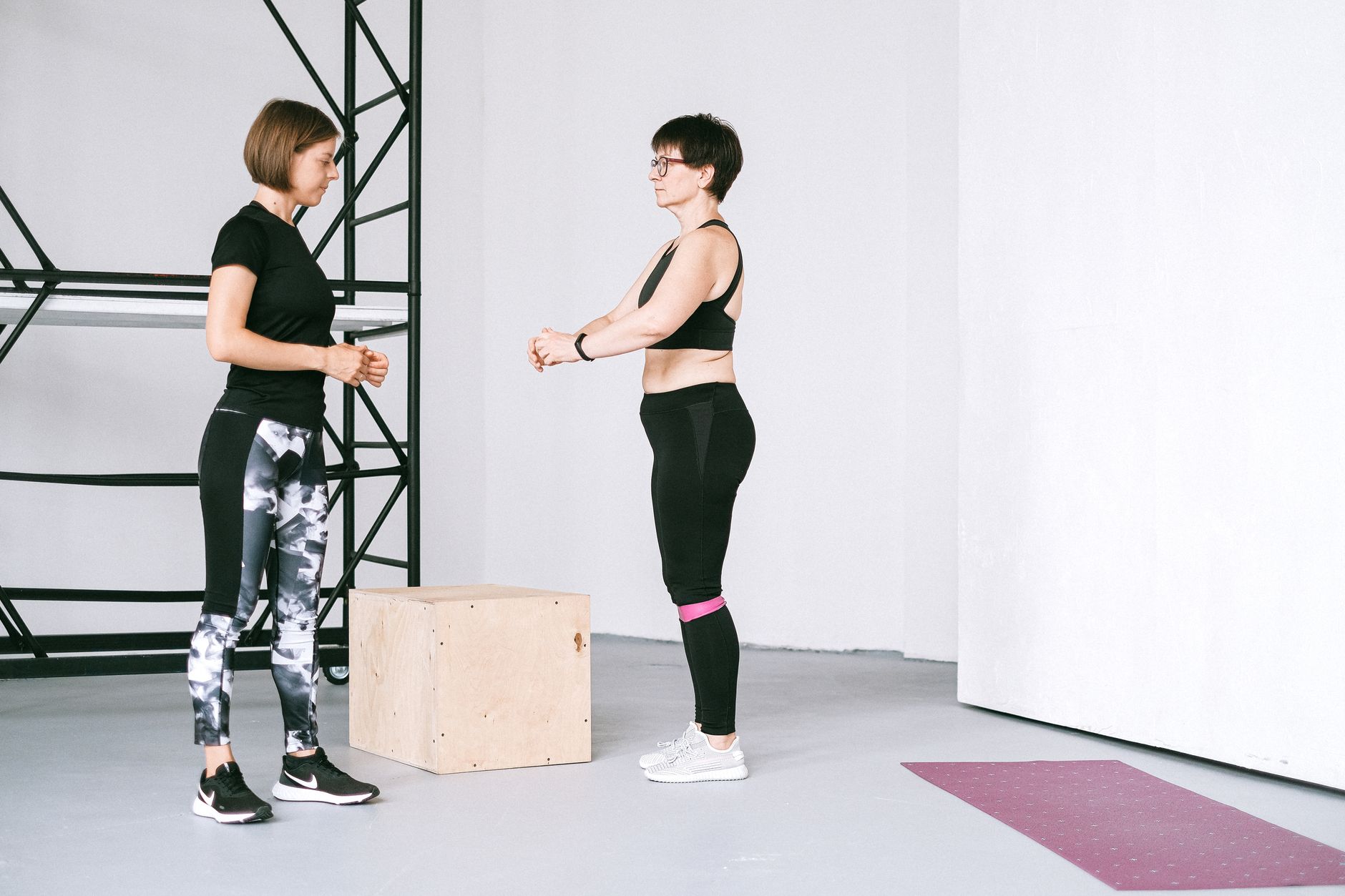
- Personal training focuses on physical performance, while coaching focuses on behavior, mindset, and self-management, in line with the NOBCO definition.
- The biggest advantage is accountability: a regular check-in that stops procrastination before it takes over.
- Nutrition, sleep, and recovery often matter more than squeezing in one extra workout.
- Progress should be measured by more than body weight: strength, body composition, fitness, and energy all count.
- A private gym removes wasted time from the equation, including waiting, commuting, and crowds.
Introduction
Do you train hard, only to see your routine fall apart the moment work, family, and other commitments pile up? District-S sees this pattern all the time in entrepreneurs and senior professionals with unpredictable schedules: the desire to get fitter and stronger is there, but workouts get pushed back, energy levels fluctuate, and after a few hectic weeks, the whole plan collapses.
Most people assume personal training is mainly about that one intense hour in the gym. For busy professionals, that is only part of the picture. The real results come from what happens outside the session: how you structure your week, how you deal with stress and poor sleep, what you eat on a day packed with meetings, and whether anyone is holding you accountable when you feel like quitting.
That is the difference between a trainer and a personal coach. One guides your exercises. The other makes sure you keep showing up, even during the week when everything goes sideways. This article breaks down what that coaching role actually looks like, and why it matters so much when your schedule is already full.
Why workouts alone are often not enough for busy professionals
The gap between wanting results and actually sticking with the plan is bigger than most people think. Not because people are lazy, but because an unpredictable schedule puts any routine under pressure. A good coach works right in that gap.
Motivation is not the issue, consistency is
Take the managing director of a mid-sized company with 40 employees and a week that looks different every Monday. Motivation is high in January, but by March, rescheduled appointments, late meetings, and travel have wiped out the planned workout slots. According to the WHO physical activity guidelines, regular movement is important for both physical and mental health, but the real challenge is rarely knowing what to do. It is sticking with it.
Why a gym membership does not solve this
A standard gym membership gives you access, but not structure. No one notices if you have not been in for three weeks. Personal training has ranked among the global top 10 fitness trends continuously since 2007, as tracked by NL Actief based on the ACSM trend report, precisely because guidance fills the gap that self-discipline often cannot cover for busy people.
The difference coaching makes
A personal coach builds a system that can survive your schedule. Not a perfect plan for ideal weeks, but an approach that adapts to both busy periods and quieter ones. District-S finds that once clients understand this, they stop thinking in extremes and start thinking in terms of sustainability.
How to apply this:
- Count how many workouts you actually completed over the past 8 weeks versus how many you planned. If you are below 70%, your system is failing, not your willpower.
- Write down which weeks things fell apart and why, such as travel, deadlines, or illness. That pattern is your real problem to solve.
- Set a fixed weekly check-in, even if it is brief, so skipping becomes visible.
- Choose workout times you can still manage during your busiest week, not your ideal one.
What does a personal coach do outside the gym?
Outside the gym, a coach provides accountability, mindset support, and help with breaking procrastination. This is the part most people underestimate, and it is exactly where coaching differs from training under the NOBCO definition.
Coaching versus training: the formal difference
Coaching is defined by NOBCO, the largest independent professional coaching organization in the Netherlands, as a structured and goal-focused process that helps someone develop effective behavior through self-awareness, personal growth, and greater confidence. A personal trainer primarily focuses on physical performance. A personal coach combines both: they guide your squat, but they also guide your habits.
Accountability is the engine
The entrepreneur from the earlier example does not drop off because they do not care. They drop off because no one notices. A coach makes slipping off track visible and discussable. In practice, that weekly moment of accountability is often more powerful than a brand-new workout program. You can see how District-S approaches this in their article on why personal training takes more than a pep talk.
Mindset and procrastination
Many professionals know exactly what they should do, but still do not do it. A coach works on the thought patterns underneath that behavior: perfectionism, all-or-nothing thinking, and guilt after a missed week. This lines up with what mindset support also does in other areas, as explained in mindset coaching for weight loss.
How to apply this:
- Ask a potential coach how they handle a week where you miss everything. A strong answer will focus on restarting, not punishment.
- Check whether there is a regular review point, weekly or biweekly, not just isolated sessions.
- Pay attention to whether the coaching also covers behavior, not only exercise technique.
- After 4 weeks, ask yourself whether you feel more accountable than when you trained alone. If not, the coaching piece may be missing.
From random workouts to a plan that survives your schedule
A coach adjusts your training around your schedule, stress, sleep, and recovery, not the other way around. That is the difference between a plan that looks good on paper and one you can actually follow.
Planning around peak work periods
Imagine a lawyer with unpredictable case weeks who cannot commit to three fixed evenings. A coach might build a structure around two non-negotiable sessions plus flexible options, so a hectic week does not wipe everything out. For a useful planning angle, see the article on working out with an irregular schedule.
Factoring in stress and sleep
Work stress and poor sleep undermine recovery, which then affects results. Research into workplace pressure, including the ADP Research Institute report People at Work (2023), shows how deeply stress affects wellbeing and performance. A coach takes that into account. After a bad night or an unusually heavy week, doing less can sometimes produce better results than forcing your way through.
Recovery as part of the plan
More training is not always better. A coach actively plans recovery, because gains in strength and fitness happen between sessions. District-S combines sleep, nutrition, and training load into one connected plan rather than treating them as separate pieces.
How to apply this:
- Identify the two weekly workouts that are non-negotiable, no matter how busy life gets.
- Track your sleep for a week. If you are consistently under six hours, your training volume may need to go down, not up.
- Do not schedule your hardest workout on your most demanding workday.
- Review your plan every month to make sure it still fits your real calendar, not your ideal one.
Nutrition without the noise: guidance for people with no time for complicated plans
Good nutrition coaching makes things simpler, not harder. For professionals with packed days, a rigid meal plan with ten perfectly timed meals is almost guaranteed to fail.
Why complicated meal plans break down
A nutrition plan that only works during a perfect week does not really work at all. A coach turns broad nutrition principles into practical decisions: what to order at a business lunch, what to eat after a late meeting, how to stay on track when the day gets messy. Lifestyle coaching is taken seriously enough in the Netherlands that a Combined Lifestyle Intervention has been covered by basic health insurance since January 2019 without excess payment, with a doctor referral and a qualified coach. Premium personal training is outside that framework, but the principle is the same: lasting change comes from behavior, not crash diets.
Nutrition matched to your goal
Someone who wants to lose fat needs a different approach from someone trying to build muscle. District-S ties nutrition to body composition rather than relying on scale weight alone, as explained in their article on improving body composition.
Personalization beats generic rules
A tailored nutrition plan takes your work rhythm, preferences, and goals into account. That is what separates real coaching from an app that gives everyone the same advice.
How to apply this:
- Start with one realistic change, such as adding protein to every meal, instead of overhauling everything at once.
- Plan your food in advance for your three busiest days of the week, so decisions are already made.
- Track progress using body composition and energy, not only body weight.
- If a nutrition plan does not fit your real schedule after two weeks, simplify it instead of blaming yourself.
Measuring results beyond the scale
A coach tracks strength, fitness, body composition, and energy, not just kilos. If you only focus on body weight, you miss half the progress and risk getting discouraged for no reason.
Why the scale can be misleading
With strength training, fat mass can go down while muscle mass goes up, leaving your body weight almost unchanged. If you only look at the scale, it can feel like nothing is happening when your body composition is actually improving. A coach makes that progress visible by using broader metrics.
The indicators that actually matter
The table below shows the difference between scale-only tracking and a broader coaching approach.
| Metric | Scale only | Broader coaching approach |
|---|---|---|
| Fat mass | Not visible | Measured every 4 to 6 weeks |
| Strength (for example squat) | Not tracked | Weekly progress in weight or reps |
| Fitness | Not tracked | Heart rate recovery and endurance tests |
| Energy and sleep | Ignored | Discussed weekly |
| Risk of losing motivation | High | Lower because there are more signs of progress |
Energy is an underrated result
Many professionals notice better focus and more energy at work before they see a lower number on the scale. That is a valid and motivating result. National lifestyle data from RIVM and CBS also show how difficult it can be to maintain healthy routines, which makes visible short-term progress even more important.
How to apply this:
- At the start, measure at least three things: strength, one fitness marker, and body composition.
- Repeat those measurements every 4 to 6 weeks instead of weighing yourself obsessively every day.
- Keep a simple weekly energy score from 1 to 10.
- If your weight stalls but your strength goes up, the plan is still working. Stay the course.
Why a private gym makes such a difference for busy professionals
A private gym removes wasted time and distractions from the equation. When every hour matters, that is not a luxury. It is an efficiency advantage.
No waiting around, full attention
In a busy commercial gym, waiting for equipment and dealing with distractions can easily cost you fifteen minutes per session. In a private setting, you train one-on-one without interruptions. That can make a focused 45-minute session just as effective as a messy hour elsewhere. District-S offers this at premium locations in Eindhoven, including Strijp-S and the city center. It is an approach that especially appeals to time-poor entrepreneurs, as described in private gym for busy entrepreneurs.
A calmer environment improves execution
In the Netherlands, fitness trainer is not a protected profession with mandatory certification, which makes it harder for consumers to judge quality. Trainers can register voluntarily through the FITNED register. In a private setting with one consistent, experienced trainer, that quality and focus are much easier to notice.
Efficiency creates consistency
Less travel time, no queues, and a coach who already knows your background all make regular training more realistic during a busy week.
How to apply this:
- Calculate how many minutes each session costs you in travel, waiting, and changing. If it is more than 30 minutes, a private setting can quickly become worth it.
- Ask whether you will keep the same trainer, so you are not starting from scratch each time.
- Check whether the trainer is registered or clearly qualified.
- Try a trial session before committing to a longer program.
How District-S delivers personal coaching in Eindhoven
District-S combines personal training, nutrition advice, and mindset coaching in a one-on-one setting. The idea is simple: results come from everything working together, not from isolated services.
One plan instead of separate services
Rather than treating training, nutrition, and motivation as separate things, District-S brings them together in one program. Your coach knows your schedule, your goals, and your weak spots, then adjusts accordingly. That is exactly what the market is increasingly asking for. Through its Fitness Centres statistics, CBS tracks how fitness centers are more often offering additional services such as coaching alongside training.
Support that takes your whole week into account
For clients in Eindhoven, this means a busy week does not automatically become a lost week. The coach adjusts the plan, keeps you accountable, and makes sure recovery and nutrition move with your reality. District-S explains how teams and entrepreneurs benefit from this in what successful teams do differently with private gyms in Eindhoven.
An easy way to get started
A free trial session makes it easy to experience the approach before making a decision.
How to apply this:
- Start with a trial session to get a feel for the coaching style, not just the workout itself.
- Ask directly how training, nutrition, and mindset will be connected in your program.
- Agree on measurable goals for 12 weeks, not just for one session.
- Choose the location, Strijp-S or the city center, that keeps your travel time as low as possible so consistency becomes easier.
Frequently asked questions
What does a personal coach do besides personal training?
A personal coach helps with behavior, mindset, and planning, not just exercise technique. Under the NOBCO definition, coaching is about self-awareness, confidence, and effective behavior, while a trainer focuses on physical performance. In practice, that means your coach keeps you accountable, includes nutrition and recovery in the plan, and adapts your approach when life gets busy.
What is the difference between a personal trainer and a personal coach?
A personal trainer guides your workouts, while a personal coach guides both your workouts and your habits. A trainer improves your execution in the gym. A coach also works on motivation, procrastination, and consistency. District-S combines both roles because that combination is what helps busy professionals turn short-term effort into lasting results.
Can personal coaching help with weight loss or stress?
Yes, because both weight loss and stress are largely behavior-driven challenges. A coach focuses on realistic nutrition, sleep, and recovery rather than crash dieting. In the Netherlands, lifestyle coaching is even covered through a Combined Lifestyle Intervention for people with overweight, with a doctor referral, which shows how seriously guided behavior change is taken.
How does personal coaching fit into a busy schedule?
By building the plan around your real week, not your ideal one. A coach will usually create a structure around two non-negotiable sessions plus flexible options, so one heavy week does not wipe everything out. A private gym with no waiting time, like District-S in Eindhoven, also makes a focused 45-minute session highly effective, which makes consistency much easier.
What should you look for when choosing a coach?
Look for clear qualifications, a fixed review process, and a sensible approach to setbacks. Because fitness trainer is an open profession in the Netherlands, registration through the FITNED register can be one sign of quality. During a trial session, ask how the coach connects training, nutrition, and mindset, and whether you will work with the same coach consistently.
Conclusion
A personal coach is the link between wanting results and actually sustaining them. The hour in the gym is the visible part, but for busy professionals, the real progress happens in everything around it: planning, accountability, nutrition, recovery, and mindset. If you only focus on the workouts themselves, you miss the exact part that helps your routine survive an unpredictable workweek.
Start small. Compare your completed workouts with the ones you planned, choose two non-negotiable sessions, and measure progress by more than the scale. Most of all, choose coaching that addresses behavior, not just exercise.
Whether you train in Eindhoven or somewhere else, the principle stays the same: structure and guidance beat motivation on its own. District-S brings together personal training, nutrition advice, and mindset coaching in luxury private gyms in Eindhoven, with a free trial session as an easy first step to experience the approach for yourself.
Would you like to learn how we can assist you with personal training?
Sources
- Guidelines on physical activity and sedentary behaviour — World Health Organization
- People at Work — ADP Research Institute
- Leefstijlmonitor — RIVM / CBS
- WHO-richtlijnen over bewegen — Who
- zo houdt NL Actief bij op basis van het ACSM-trendrapport — Nlactief
- NOBCO, de grootste onafhankelijke beroepsorganisatie voor professionele coaching in Nederland — Nobco
- vanuit de basisverzekering wordt vergoed zonder eigen risico — Blcn
- wat het voor consumenten lastig maakt de kwaliteit te beoordelen — Personaltrainerworden