
Quick summary
Training without wasting time does not mean training less. It means cutting out everything around the workout that adds no value: travel time, waiting for equipment, and figuring out what to do once you get there. District-S sees this all the time with entrepreneurs in Eindhoven. A 45 to 60 minute session in a private gym often delivers more than 90 minutes in a standard gym, simply because every minute is used well. The formula is simple: a fixed schedule, high intensity, and coaching that removes the mental load.
- Most time is wasted around the workout, not during it: waiting, changing, planning, and second-guessing.
- Short, high-intensity workouts can improve fitness more efficiently than long, moderate sessions.
- A private gym eliminates waiting for equipment and keeps each session on schedule.
- Corporate fitness can be tax-free under certain conditions, which can make it financially attractive for both business owners and their teams.
- District-S works with one-on-one coaching, tailored training plans, and fixed time slots so your training fits your calendar, not the other way around.
Introduction
You block out Wednesday at 7:00 a.m. for the gym. You arrive, three people are waiting for the rack you need, you cobble together half a workout, and 80 minutes later you leave feeling like you mainly lost time. District-S sees this pattern constantly among entrepreneurs and professionals in Eindhoven. The workout itself is not the problem. Everything around it is.
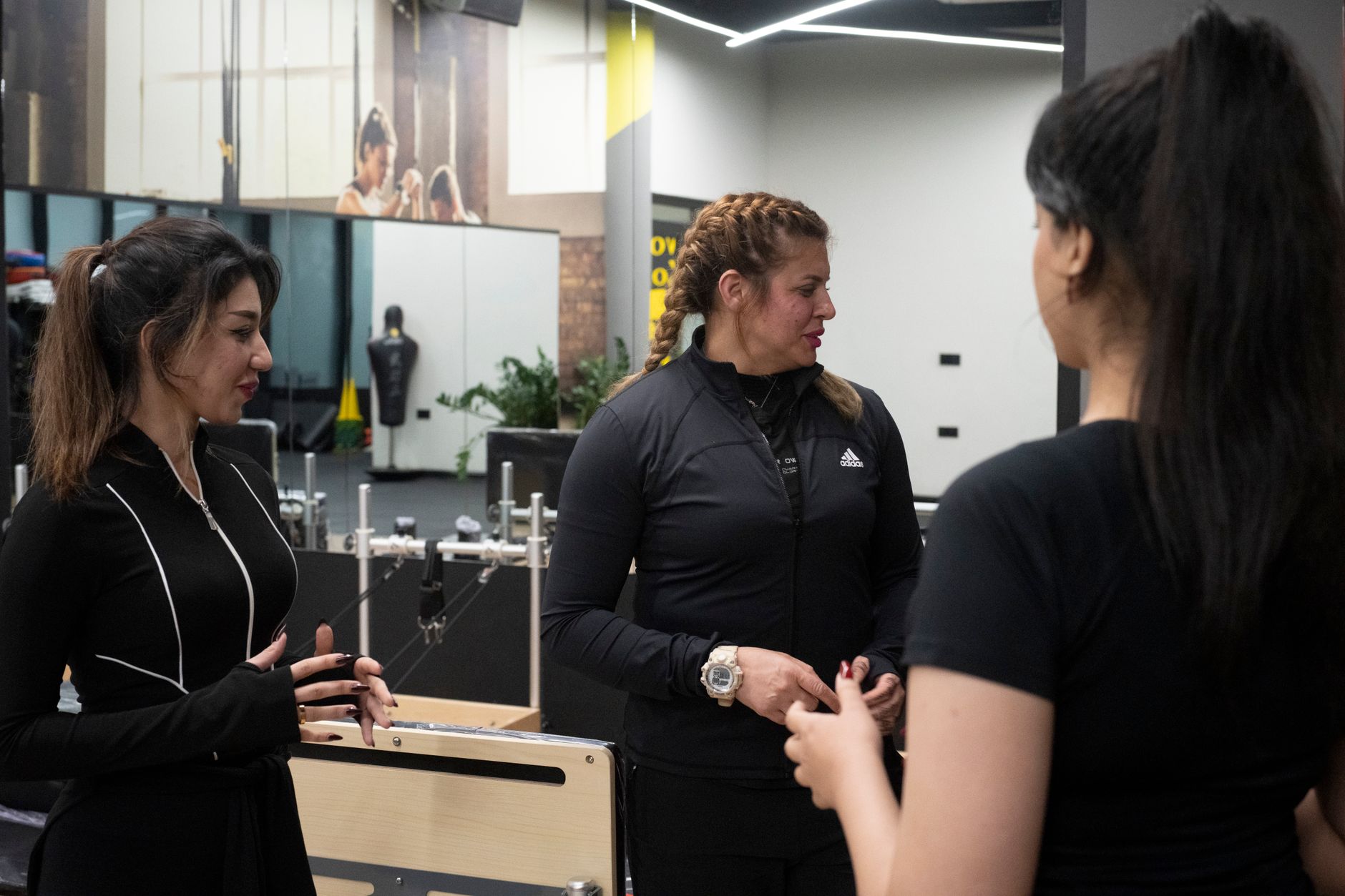
For busy entrepreneurs, the real cost is not the intensity of the session. It is the commute, the waiting, the uncertainty about what to do next, and the lack of a plan you can trust. If you work 60 hours a week, you cannot afford a workout that takes 90 minutes and gives you 40 minutes of real value.
This article breaks down where that time actually disappears, why the usual gym model does not solve it, and how a private gym with focused coaching helps you get results without sacrificing your mornings or evenings. The focus here is business fitness: training built around a packed schedule.
Where do you actually lose time when working out?
Most workout time is lost before and after the exercises, not during them. If you want to fix the problem, you first need to see where the waste is happening. For busy entrepreneurs, small delays can easily add up to 30 minutes or more per session.
Travel time and waiting time
A standard gym is rarely exactly on your route. Add the drive, parking, and getting in and out, and you can lose 25 minutes before your first set. Then there is the waiting. During peak hours, you may queue for the squat rack or cable machine. For someone with a calendar full of meetings, that is not a minor annoyance. It can be the difference between going and skipping the session entirely.
Decision fatigue and no clear plan
One of the biggest hidden time drains is hesitation. What am I training today? How many sets? Have I done this already this week? If you walk onto the gym floor without a plan, you lose time making choices and often default to the same exercises out of habit. In the District-S approach, this comes up a lot with entrepreneurs. They spend all day making decisions, so by the time they reach the gym, they do not want to think anymore.
The wrong intensity
Long workouts are not automatically better workouts. A lot of people stretch sessions out with low-intensity training because they assume more time means more progress. Fitness and cardio training have been the most popular forms of exercise in the Netherlands for years. According to RIVM and CBS (Sport en bewegen in cijfers), fitness or cardio training was the most practiced sport in 2024 among Dutch residents aged four and older. But popularity does not equal efficiency.
How to apply this:
- Track your total door-to-door time for one week, not just the workout itself. If the overhead is more than 30 minutes, your location or setup is likely the biggest problem.
- Count how many minutes per session you spend waiting for equipment. If it is consistently more than 5 minutes, switch to a setup without queues.
- If you walk in without a plan, write down three exercises in advance, or have a structured program made so you do not need to make decisions on the gym floor.
Why a regular gym does not work with a packed schedule
Traditional gyms are built for volume and self-service, which is the exact opposite of what a time-poor entrepreneur needs. There are three built-in limitations that make the standard model a poor fit.
Designed for the masses, not for speed
A large gym makes money through member volume. That means peak-hour crowds at exactly the times working professionals are available: early morning and after office hours. Those are also the times when waiting is worst. The business model is about fitting as many people in as possible, not getting you through an effective session as quickly as possible.
No coaching means no direction
Without someone watching and guiding you, it is easy to get stuck in the same routine. Technique slips without you noticing, the load never really progresses, and results plateau after a few months. For busy entrepreneurs, that is especially frustrating. You are putting in the time, but not getting enough back. The same reason many people fail to lose weight without a plan or coaching applies here too: without direction, progress fades.
Motivation does not last long enough
Discipline is not endless. An entrepreneur who has been making decisions and performing all day has very little willpower left in the evening. District-S sees this all the time. The real issue is usually not physical ability, it is consistency. If your training depends on how motivated you feel that day, you are most likely to skip sessions during your busiest weeks, exactly when your health matters most.
How to apply this:
- If you train during peak hours, between 7:00 and 9:00 a.m. or 5:00 and 7:00 p.m., and regularly wait for equipment, either move to off-peak hours or switch to a setup without shared machines.
- If your results stall after two to three months of training alone, that is a sign your program lacks coaching and progressive structure.
- If you skip more than one in three planned sessions, you are relying too much on motivation. A fixed training slot turns exercise into part of your week, not a maybe.
How do you train effectively in less time?
Short workouts only work if the intensity is high and the program is well designed. Time efficiency is not about doing less. It is about wasting nothing. For most people, two 45 to 60 minute sessions per week are enough to build measurable strength, as long as those sessions are focused.
Intensity matters more than duration
Research supports the shorter, harder approach. Studies including work from Maastricht University show that high-intensity interval training can improve aerobic fitness faster and more efficiently than moderate-intensity training when total training volume is the same. For an entrepreneur who wants to build fitness alongside strength training in 20 minutes, that is exactly the advantage: more return per minute.
A program that does the thinking for you
One of the biggest benefits of coaching is not during the session itself, but before it starts. At District-S, clients work with tailored programs that change weekly, so the moment you walk in, you know exactly what you are doing. No hesitation, no improvising. In a one-on-one setting, your trainer also adjusts the load for you: enough overload to drive progress, not so much that you risk injury. That kind of controlled guidance is especially valuable if you are rebuilding after an injury.
Nutrition multiplies the value of your training time
Training without the right nutrition is like driving with the handbrake on. A tailored nutrition plan makes sure the time you spend in the gym actually pays off in fat loss or muscle gain. District-S combines training, nutrition, and mindset coaching for exactly this reason. Otherwise, progress is often lost outside the gym, not inside it. District-S explains this in more detail in the approach behind premium personal training.
How to apply this:
- Limit each session to four or five compound exercises, such as squats, deadlifts, rows, and presses. Isolation work takes time and usually gives less return.
- Build progression through one variable each week: slightly more weight or one extra rep. Keep it measurable.
- Finish with 10 to 15 minutes of interval training for conditioning instead of doing 45 minutes of cardio beforehand.
Why do busy entrepreneurs choose a private gym and corporate fitness?
A private gym removes the exact inefficiencies built into a regular gym: no waiting, no distractions, and a fixed time slot booked like any other appointment in your calendar. If your schedule is tight, that is often the difference between training consistently and falling off track.
Calm environment and full attention
In a private setting, you are not sharing the floor with dozens of other people. The trainer is focused entirely on your technique and your program. That improves safety, but it also saves time. Corrections happen immediately, not three weeks later when an injury has already developed. That quiet, focused atmosphere is one reason District-S works from luxury private gyms in Strijp-S and central Eindhoven.
Training becomes an appointment, not an option
A fixed time slot with a trainer changes the psychology completely. People rarely skip an appointment with someone else, but solo training is easy to drop the moment work gets hectic. In District-S’s experience, this is what keeps entrepreneurs consistent. It is not about finding more motivation, it is about locking training into the calendar. You can see how that works in practice in this explanation of the private gym approach.
The tax-free corporate fitness scheme
There is also a financial advantage many entrepreneurs overlook. The Dutch government has a tax arrangement for corporate fitness. According to the Arboportaal of the Ministry of Social Affairs and Employment, employer-funded or employer-provided fitness can be tax-free under certain conditions, as long as it involves cardio or strength training organised or initiated by the employer. For entrepreneurs who want to include their team in a program or offer a business boxing course, that can make the investment more attractive from a tax perspective. The size of the sector also shows how seriously sport is taken. According to CBS (De Nederlandse sporteconomie 2019), municipalities, clubs, and commercial providers together invested an estimated 230 million euro in sports facilities.
| Aspect | Regular gym | Private gym (District-S) |
|---|---|---|
| Overhead per session | 20 to 40 min (travel, waiting) | 5 to 10 min |
| Waiting for equipment | Common at peak hours | None, exclusive slot |
| Coaching | Self-directed | One-on-one, every session |
| Time needed for an effective session | 75 to 90 min | 45 to 60 min |
| Consistency | Depends on motivation | Anchored with a fixed time slot |
How to apply this:
- Do the math on your overhead. If you save 20 to 30 minutes per session, two sessions a week gives you more than an hour back.
- Ask your accountant whether the corporate fitness tax scheme applies to your situation before starting a team program.
- Not sure yet? A free trial session lets you experience the private setup and measure the time savings for yourself.
Frequently asked questions
What is business fitness and how does it work?
Business fitness is training designed to fit around a demanding workweek, not compete with it. Think short, high-intensity sessions with coaching and a fixed time slot. The goal is maximum return per minute, usually through two 45 to 60 minute sessions per week. It is about efficiency, not spending as much time in the gym as possible.
How long do I need to train to see results without wasting time?
Effective training takes less time than most people assume. For most people, two focused sessions of 45 to 60 minutes per week are enough to build measurable strength. The key is high intensity and tracked progression. Long, low-intensity workouts often deliver less value per minute.
Is corporate fitness tax-free for entrepreneurs and employers?
Corporate fitness can be reimbursed or provided tax-free under certain conditions, as long as it involves cardio or strength training organised or initiated by the employer, according to the Arboportaal. That can make a team program or business boxing course more tax-efficient. Have your accountant check the exact rules for your situation.
How does District-S help entrepreneurs save time on training?
District-S cuts out the wasted time around training through luxury private gyms in Strijp-S and central Eindhoven, where there is no waiting and the trainer gives you full attention. One-on-one coaching, tailored weekly training plans, and fixed time slots mean you do not have to make decisions on the gym floor. A free trial session lets you experience the time savings yourself.
Is a private gym worth the higher cost compared with a regular gym?
A private gym costs more per session, but it often delivers better results per minute because of the coaching, the lack of waiting time, and the built-in consistency. For an entrepreneur who saves 20 to 30 minutes of overhead per session and actually makes progress, the time gained often matters more than the price difference. You can see what that looks like in practice in this overview of personal training rates in Eindhoven.
Conclusion
Training without wasting time is not about exercising less. It is about removing everything that does not move the needle: travel time, queues, indecision, and long sessions that deliver too little.
For busy entrepreneurs, the path is clear. Choose short, high-intensity sessions, follow a program that removes the mental effort, and lock it into a fixed time slot you do not casually skip. A private gym makes that possible, and the Dutch corporate fitness tax scheme can make business fitness more financially attractive for you and your team than you might expect.
Whether you train in Eindhoven or elsewhere, the principle is the same: your gym should adapt to your calendar. District-S brings that to life with one-on-one coaching and a free trial session, so you can measure the time savings for yourself before committing.
Would you like to learn how we can assist you with personal training?
Sources
- RIVM en CBS (Sport en bewegen in cijfers) — Sportenbewegenincijfers
- Universiteit Maastricht — Ntvo
- Arboportaal van het Ministerie van Sociale Zaken en Werkgelegenheid — Arboportaal
- CBS (De Nederlandse sporteconomie 2019) — Cbs
- Sportdeelname wekelijks | Sport en bewegen in cijfers — RIVM / CBS
- Fiscale regeling bedrijfssport — Arboportaal (Ministerie van Sociale Zaken en Werkgelegenheid)
- Prehabilitatiefase van abdominale kankerchirurgie: matig intensieve duurtraining of HIIT? — NTVO / Universiteit Maastricht en VieCuri Medisch Centrum
- De Nederlandse sporteconomie 2019 — CBS